Live Dealer Blackjack in New Zealand: Rules and Play
 Available in US
See how the streamed table works, what decisions are available during a hand, and which rules and payouts to review before playing for real money.
Table of Contents
- How Live Dealer Blackjack Works in New Zealand
- Choosing a Live Table When You Care About the Rules
- What to Check on a Live Blackjack Site
- Before You Play for Real Money
- The Choices You Can Make During a Hand
- The Aim of Blackjack and How Cards Count
- Real-Money Tables: Blackjack Payouts to Check
- Free Play and the Difference Between Live and RNG Blackjack
- Blackjack Variants, Side Decisions and Insurance
- What Changes When You Play With a Live Dealer
How Live Dealer Blackjack Works in New Zealand
Live dealer blackjack combines a physical card game with an online video stream. A dealer handles actual cards at a table, while you watch the action on a screen and submit your decisions through the game interface. The stream lets you follow a real table rather than a sequence generated entirely by a computer, but it does not remove the practical limits of playing remotely. A delay in the video or connection can slow the pace, and a live table may ask for higher bets than other online formats.
That difference matters when choosing what kind of experience you want. The cards are real, but you are not seated beside the dealer: you rely on the stream and the controls provided on screen. If the video pauses or the connection falters, the game may not feel as immediate as a table in a venue. Live blackjack is therefore not simply a faster or more personal version of online blackjack. Its defining feature is the streamed physical table, with the convenience and the technical friction that come with it.
Choosing a live dealer blackjack site in New Zealand means finding an option that fits your needs and checking its terms before you play. Use this list as a starting point for your research.
License: Malta Gaming Authority, licence no. MGA/B2C/394/2017 N1 Casino lists a Malta Gaming Authority licence, number MGA/B2C/394/2017. You can use that detail as one point to verify when assessing the casino.
Payout speed: 1-3 business days Lamabet lists a payout speed of 1–3 business days. If withdrawal timing matters to you, consider this stated timeframe.
Payout speed: 1-3 business days Wintino lists a payout speed of 1–3 business days. This gives you a stated timeframe to consider when reviewing its terms.
License: Malta Gaming Authority, licence no. MGA/B2C/370/2017 Play Grand lists a Malta Gaming Authority licence, number MGA/B2C/370/2017. You can check this licence detail as part of your research.
License: Tobique Gaming Commission, licence no. 0000091 7Bit Casino lists a Tobique Gaming Commission licence, number 0000091. This is a licence detail you can take into account when reviewing the operator.
License: Tobique Gaming Commission, licence no. 0000064 Neospin lists a Tobique Gaming Commission licence, number 0000064. You can use the stated licence information as one point of reference.
License: Tobique Gaming Commission, licence no. 0000002 Ricky Casino lists a Tobique Gaming Commission licence, number 0000002. Check the operator’s terms and relevant details before deciding whether it suits you.
License: 07017519840 · Payout speed: 1-3 business days Zotabet lists the licence identifier 07017519840 and a payout speed of 1–3 business days. These details give you specific points to consider when reviewing the operator.
License: Curaçao Gaming Authority, licence no. OGL/2024/165/0185 BitStarz lists a Curaçao Gaming Authority licence, number OGL/2024/165/0185. You can verify this stated licence information as part of your assessment.
The phrase “live dealer” describes how the game is presented, not who regulates the provider or what protections apply. A real dealer and real cards do not, by themselves, establish that a website holds a New Zealand licence. That distinction is especially important in 2026, when the country is moving from a period without a domestic online casino licensing system to a new regulatory framework.
The Online Casino Gambling Act 2026 took effect on 1 May 2026 and created New Zealand’s first domestic licensing regime for online casino gambling. It also set a transition running from that date to 1 December 2026. Online casino providers that were already serving people in New Zealand before the Act began may continue during this period under its transitional provisions. The full licensing regime is not expected to be operating in full until 2027, so the transition should not be mistaken for a completed licensing system.
The responsibilities are divided between two public bodies. The Department of Internal Affairs is New Zealand’s primary gambling regulator and oversees regulation of the online casino licensing framework. The Gambling Commission hears and decides casino licence applications, issues online casino licences and approves changes to licence conditions. Those roles describe the framework; they do not mean that every live dealer website available to a New Zealand resident is licensed locally.

That qualification has a history. Under the Gambling Act 2003, online casinos cannot be based in New Zealand, and domestic online casinos are prohibited. Before the 2026 Act, gambling offered online from outside the country was not licensed or supervised by a New Zealand regulator. Customers who wagered with offshore websites during that period had no domestic government recourse if a dispute arose. The new framework changes the legal structure, but its transition provisions mean the 2026 position depends in part on when a provider began operating and what step it takes under the Act.
Providers that were already active before 1 May 2026 can continue through the transition until 1 December 2026. After that date, a provider that has not applied for a licence must stop conducting online casino gambling in New Zealand. The licensed regime is expected to become fully operational in 2027, and unlicensed operation is expected to become an offence from around the middle of that year. These dates concern providers and the regulatory transition; they should not be confused with a statement that a live table is locally licensed simply because it accepts play from New Zealand.
For readers, the practical point is to separate the format from the legal status. A streamed dealer may make a blackjack session resemble a casino table, but the stream is not a licence, and the presence of physical cards does not answer who stands behind the service. In 2026, New Zealand’s rules are changing in stages. The Department of Internal Affairs oversees the framework, while the Gambling Commission handles licensing decisions and licence conditions. Checking which stage of that system applies is more useful than treating “live” as a mark of regulatory approval.
Attention: A live dealer and real cards do not guarantee that a website holds a New Zealand licence, especially during the 2026 regulatory transition.
The game itself may also be less continuous than a software-based table because the cards are dealt in real time and the video must reach your device. Higher minimum bets can be another difference, so the live format may not suit every budget or preferred pace. Those are features of the experience, not guarantees about any particular website. Before treating an online live table as equivalent to a local casino service, keep both parts in view: how the game is delivered and the regulatory position of the provider in New Zealand.
Choosing a Live Table When You Care About the Rules
A live blackjack table is not defined by its camera or dealer alone. The rules attached to it shape how the game is played and can affect its house edge: the mathematical advantage the rules give the casino over time. Two tables carrying the same game name may therefore offer different conditions. If you are comparing live blackjack in New Zealand, treat the rules shown for each table as part of the game, not as small print to skim after choosing it.
Start with the number of decks. A table may use a different number of decks from another, and that can matter to the probabilities underlying blackjack. The relevant detail is the rule for the specific table you are considering; a general description of a casino’s blackjack offering does not establish what applies to every live game there. If a game page describes several tables, compare their individual rules rather than assuming the wording applies uniformly.
Next, look at how the dealer handles a soft 17. A soft hand contains an ace counted as 11 without taking the total above 21; a soft 17 is an example of a hand whose treatment is specified by the table rules. The dealer may be required to hit or stand, and that difference can change the game’s house edge. Do not infer the rule from the table’s name or the way the dealer appears to play in a short stream. Find the stated condition for that game.
Payout rules deserve their own comparison. A natural blackjack does not necessarily receive the same payout at every table. A specialist review has described both 3:2 and 6:5 payouts, but that is not a dependable description of every live table or a substitute for its own posted rules. Read the payout attached to the particular game you are considering. A familiar table label is not enough to establish what a natural pays.
Also note whether surrender is permitted. This is a rule-dependent option, not something to assume is available at every table. The table’s rules may set out whether it is offered and under what conditions. When you compare games, record the answer rather than treating a missing reference as confirmation that the option exists. The point is not to choose a table by one attractive feature, but to understand the full set of conditions that governs it.
These details work together. A payout that looks favourable in isolation does not tell you the overall value of the game if other rules differ. Nor does a larger or smaller deck count, considered alone, settle which table has the lower house edge. Blackjack variants change rules, and those changes can affect both strategy and house edge. A comparison should therefore be based on the complete rule set, not on a single headline term.
- Compare specific rule sets for each individual table
- Record stated conditions like deck count and payouts
- Use specific wording such as “stands on soft 17”
- Assume rules apply uniformly across all games on a site
- Fill information gaps with assumptions from other games
- Choose a table based on a single headline term
If two tables display their rules clearly, make a simple side-by-side note of the deck count, the dealer’s soft-17 requirement, surrender availability and the natural-blackjack payout. Keep the wording specific: “stands on soft 17” is more useful than “standard rules,” which does not tell you what the table actually requires. If a condition is not stated, regard it as unresolved rather than filling the gap with an assumption based on another game.
A live stream can make a table feel transparent, but seeing the cards does not reveal every rule that governs the game. The stream shows the round; the written rules explain the conditions. If the displayed rules are incomplete or unclear, you cannot make a reliable comparison with another table from the stream alone. That is a practical reason to favour clear information over a persuasive presentation.
Card counting is another point worth separating from table choice. In New Zealand, using mental calculation to count cards is not illegal. That legal point does not establish that counting will be effective at an online live table, nor does it tell you how a particular game is dealt or managed. Avoid treating a legal distinction as a promise about results. For choosing between tables, the published rules remain the useful basis for comparison.
There is no single rule feature that makes a live table the right choice for everyone. The more useful question is whether you understand the conditions attached to the specific game and whether they suit what you are looking for. Comparing the rules in full is less dramatic than choosing by a label, but labels do not determine the house edge.

What to Check on a Live Blackjack Site
A live blackjack page should tell you more than the name of a table and whether it is available on your device. Before relying on a listing, open the table information and check that the rules apply to that specific game. A specialist review notes that deck count, the dealer’s treatment of soft 17, surrender options and natural-blackjack payouts can differ between games. The table’s own displayed rules are the detail to check; a general description elsewhere on the site may not cover every table.
Look for the rules before joining, not after the game has started. If the site shows a help panel, game guide or information icon, open it and see whether it identifies the table’s rules clearly. Check that you can find the dealer’s soft-17 rule, the number of decks and whether surrender is available. Confirm that the payout information refers to that table rather than to blackjack in general. If a rule is unclear or the information is missing, treat that as a reason to pause rather than filling in the gap with assumptions.
Then check how the site presents its live tables. Can you distinguish one table from another by its rules, limits and format, or do the listings provide little beyond a name? If you are looking for a lower-stakes table, inspect the displayed minimum and maximum bets directly. Those conditions can differ across tables, and a label such as “low stakes” is not a substitute for seeing the actual limits. Do not assume that a table’s limits will remain the same across all sessions.
Check Live Table Details
- Open the table information or help panel
- Confirm the deck count and soft-17 rule
- Verify surrender options and natural-blackjack payouts
- Check the actual minimum and maximum bet limits
- Test the readability of rules on your device
If you plan to use a phone or tablet, test the information as well as the stream. The table rules should remain readable on a smaller screen, and the controls and information panel should be accessible without obscuring what you need to follow. A live table that loads on mobile but hides its rules behind an awkward interface is technically available, but not particularly transparent. Check whether the page makes clear what happens if the connection drops or the stream pauses; do not assume that every site handles interruptions in the same way.
Treat promotional wording separately from the game details. If a site advertises a no-deposit bonus or another offer, read the full terms before you accept it. Check wagering requirements, whether blackjack contributes differently from other games, and any maximum-bet rules that apply while wagering. A prominent offer is not a substitute for clear table information, and its conditions may affect how you can use it.
Finally, look for signs that the information is maintained consistently: the table page, rules panel and help materials should not contradict one another. Check that you can reach customer support and find the site’s terms and responsible-gambling information. In New Zealand, the online casino licensing framework is in transition, so a polished presentation alone does not establish a provider’s local regulatory status. The Department of Internal Affairs is the primary gambling regulator, while the Gambling Commission is responsible for casino licensing applications and licence conditions. For a practical inspection, clarity matters: you should be able to identify the rules for the table you are considering and understand the site’s stated conditions before proceeding.
Before You Play for Real Money
A live table can look much the same whether you are browsing or staking money, but the decision changes once your balance is involved. Before joining an online blackjack table with a live dealer, pause to check the information attached to that exact table and decide what you can afford to lose. A smooth stream and an attractive interface do not make a stake safer.
Set a budget before opening the game. Treat it as entertainment spending, separate from money needed for bills or other commitments, and stop when you reach it. Do not add funds to recover losses: a losing run does not make a later hand more likely to pay. If you find it difficult to stick to a limit, step away rather than trying to solve the problem at the table.
Read the table rules before you sit down, even if you have played blackjack elsewhere. The number of decks, the dealer’s approach to soft 17, surrender availability and the natural-blackjack payout can differ. Check that the displayed rules are clear and apply to the table you intend to join; a general site description may not cover every game. Rules influence what a stake means, so do not rely on a table name or thumbnail as a substitute for the details.
Also look at the table’s minimum and maximum stakes before committing. A live game may set a higher minimum than you expected, and the available range can affect whether it fits your budget. If the lowest permitted stake is already more than you planned to spend, choose another table or leave the game. There is no need to stretch a budget to match a table.
If you are considering a bonus, read its terms before accepting it. Check how blackjack contributes to wagering requirements and whether maximum-bet rules apply while those requirements are active. These conditions can change how much play is needed before funds can be withdrawn, and breaching a maximum bet rule may affect eligibility. Do not assume that a bonus is cash you can withdraw immediately, or that every game contributes in the same way.
Financial Risk
Set a strict budget and treat it as entertainment spending; never add funds to recover losses.
For New Zealand residents, the legal setting is also changing. The Online Casino Gambling Act 2026 took effect on 1 May 2026 and created a transition period through 1 December 2026. Providers already serving New Zealand customers before the Act took effect may continue during that period under its transitional provisions; the full licensing regime is expected to be operational in 2027. This does not make every site locally licensed during the transition. Before risking money, understand who operates the site, what recourse is available, and what the terms say about deposits and withdrawals. If any of those details are unclear, do not proceed.
The Choices You Can Make During a Hand
Once a live blackjack hand is under way, your decision is usually one of a small set of actions: hit, stand, double down or split. Some tables also offer surrender. The available choices depend on the table’s rules, so do not assume that every option will appear in every game.
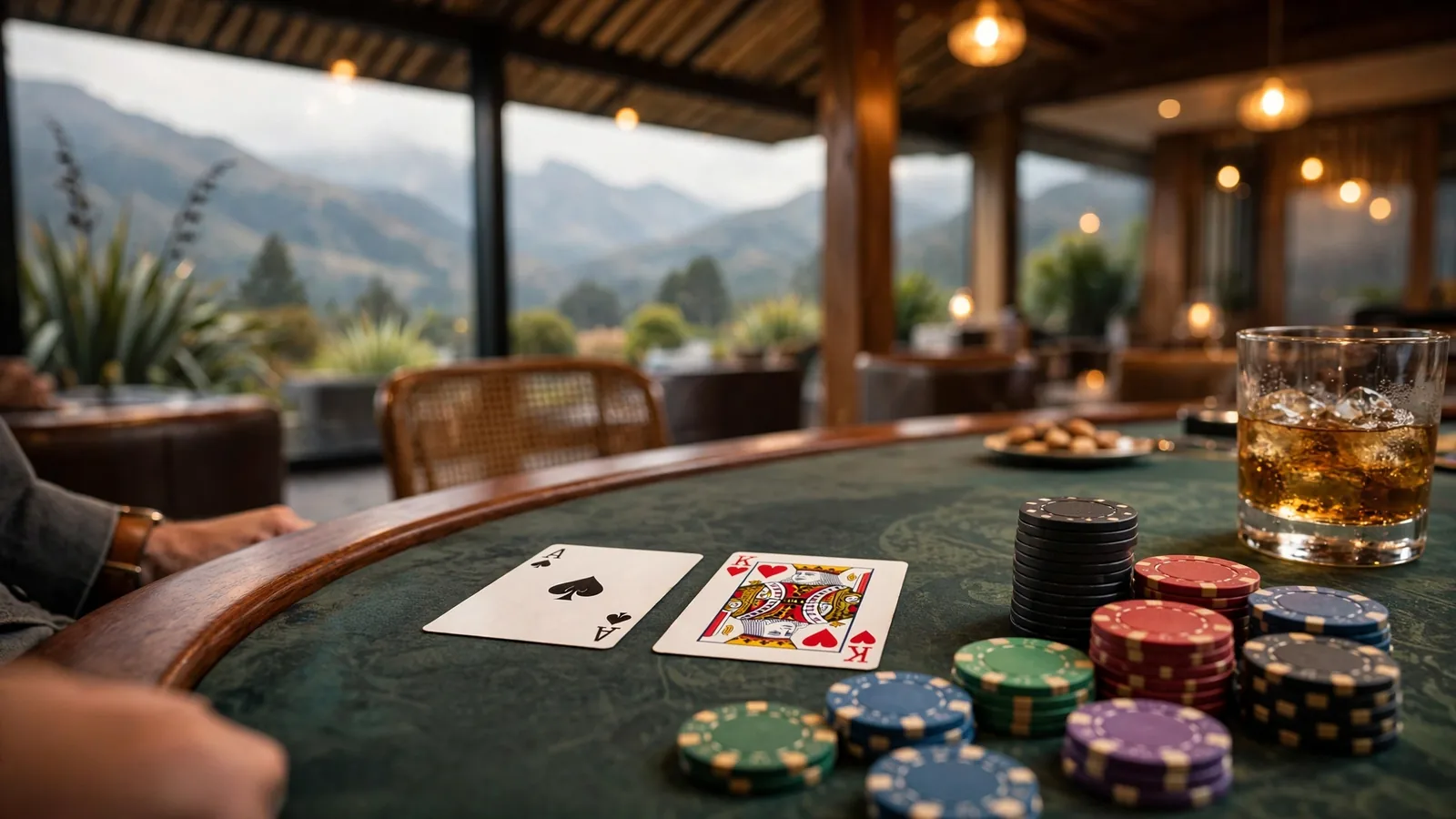
Hit means taking another card. You can choose it when you want to continue the hand rather than keep your current cards. The decision carries a trade-off: another card may improve your position, but it may also leave you worse off. The game’s controls let you make the choice; the streamed dealer then handles the physical cards.
Stand means taking no further cards. It ends your decisions for that hand, leaving the dealer to complete their part of play. Standing is not a separate kind of bet; it is a choice to stop drawing.
Double down combines a further card with an increased stake, subject to the table’s rules. It can be an attractive option when you want to commit more to a hand, but it also means more money is at risk. Check what the table permits before relying on this choice: rules can differ, and the available controls should reflect them.
Split may be available when your initial cards form a pair. Choosing it separates them into two hands, each of which is played on its own. Splitting can therefore create an additional decision and may require another stake. The exact conditions for splitting are table-specific, so read the rules rather than assuming that every pair can be treated the same way.
Surrender is not offered everywhere. Where it is available, it lets you give up the hand under the table’s conditions instead of continuing to play it. Its timing and terms matter: check the written rules to see when it can be chosen and what happens to your stake. If you cannot find a clear explanation, do not infer the terms from the button label alone.
A live dealer does not remove the need to make these decisions. The dealer handles actual cards, while you choose actions through the game interface. Take a moment to understand the controls and the relevant table rules before committing to an action. A hurried click can be difficult to undo, and the streamed format may not feel as immediate as a software-only game.
When comparing your options in a particular hand, keep the decision separate from assumptions about what the game will do next. The interface presents choices; it does not tell you which one is right. Rules determine which actions are allowed, while your decision determines how you continue with the hand.
- Hit to take another card and improve your total
- Stand to end your decisions and stop drawing
- Double down to increase your stake for one more card
- Split pairs into two separate hands
- Surrender to give up the hand under specific conditions
The Aim of Blackjack and How Cards Count
Blackjack is a contest between you and the dealer, not a competition to match the other people at the table. Your aim is to finish with a total closer to 21 than the dealer’s, without going over 21. The dealer’s hand is the comparison point; a strong-looking total is not enough if the dealer finishes closer.
To follow a hand, start with the value of each card. Number cards count as the number printed on them. Every king, queen and jack is worth 10, regardless of its suit. An ace is flexible: it can count as 1 or 11, depending on which value makes the hand stronger without taking the total above 21.
That flexibility is why the same cards can have different useful totals. An ace with a six can be treated as 7 or 17. The higher total is available while it remains safe; if another card would make 17 exceed 21, the ace can instead count as 1. This is often described as a “soft” total when the ace is being counted as 11, because its value can shift. A total without that flexibility is called “hard”. These labels describe the hand, not a different card or special rule.
The dealer’s cards are assessed by the same values. In a live game, the cards are dealt physically and shown through the stream, but the calculation is still the familiar one: add the values in each hand, taking care with an ace. The screen may display a running total, yet understanding how that total is formed helps you notice when an ace can be counted either way.
The target is not simply to reach 21 at any cost. If your total goes above 21, you have exceeded the target, even if the dealer later ends with a higher total. Conversely, a total below 21 can still be enough if it finishes closer than the dealer’s. A natural 21 is therefore not the only total that can matter; the comparison between the two hands decides the outcome.
This basic framework also helps make the dealer’s total easier to read. A displayed ace may represent either value until the rest of the hand is known, while a face card always contributes 10. When the cards are visible, you can work out what totals are possible rather than treating the displayed number as fixed.
In a live-dealer blackjack game, the dealer handles real cards while you follow the hand on screen. The streamed format changes how the cards reach you, not what they count for. Whether you are watching a live dealer or looking at a software-rendered table, the aim remains the same: make a hand that is nearer to 21 than the dealer’s, while staying at or below that total.
Real-Money Tables: Blackjack Payouts to Check
A natural blackjack does not pay the same way at every live table. A specialist review reports that the payout may be 3:2, while some tables use 6:5. These ratios describe the profit paid on a natural, not the return of your original stake. The difference can matter over repeated hands, so do not assume that a table offers a particular payout just because it is labelled blackjack.
Payout Differences
A natural blackjack payout can be 3:2 or 6:5, which describes the profit paid on the hand rather than the return of the original stake.
Look for the payout in the table’s rules or information panel before you stake money. Check that it applies to the table you are joining: a site may offer more than one live game, and their conditions can differ. If the payout is not displayed clearly, do not treat a general site description or a promotional banner as a substitute for the table rules.
The natural-blackjack payout is only one part of those rules. A specialist review also notes that tables can differ in the number of decks used, whether the dealer hits or stands on soft 17, and whether surrender is available. Those details do not change the stated natural payout, but they help define the game you are entering. Compare the rules as a set rather than judging a table by one favourable feature.
For real-money blackjack with a live dealer, the streamed presentation does not make the payout automatic or uniform. The table’s written terms are what you need to check. If the rules are difficult to find, inconsistent with the game screen, or unclear about which hands qualify for the stated payout, pause rather than relying on an assumption. A visible dealer and cards are no substitute for legible terms.
Also read any bonus conditions before accepting an offer. Blackjack may count differently from other games toward wagering requirements, and maximum bet rules can apply while you are wagering. These conditions are separate from the table’s natural-blackjack payout, but they can affect how a bonus works in practice. Do not assume that a displayed payout tells you how bonus play is treated.
Set a budget before playing and do not chase losses by increasing your stake after an unfavourable run. A payout ratio describes a rule, not a promise about what will happen in your session. Check the table details and the relevant fine print on a trustworthy site before committing real money.
Free Play and the Difference Between Live and RNG Blackjack
Free blackjack can refer to different things: a game played without staking money, or a software-based version that deals cards automatically. The label alone does not tell you whether a particular site offers a free live-dealer table. Live play involves a streamed dealer and actual cards, while RNG blackjack uses software shuffles. The two formats can feel quite different even when the basic game is blackjack.
An RNG game moves more quickly because software handles the shuffle and deal. You do not have to wait for a dealer to manage physical cards or for a stream to catch up. A live table can have pauses caused by the pace of dealing or the video connection, and its minimum bets may be higher. Those differences matter if you are comparing a fast practice session with the experience of watching a dealer.
Free play is useful only within its limits. A software game played without money can help you get used to the interface, but it is not the same as a live table if the live version has a dealer, a stream and different table conditions. Nor does a free-play label establish that the game uses the same format or rules as a real-money table. Check what the particular game says before treating practice as a preview of live play.
Live vs RNG Blackjack
Live play uses a streamed dealer and actual cards, which can lead to pauses due to dealing pace or connection. RNG blackjack uses software shuffles for faster, uninterrupted play.
The question of whether live-dealer blackjack is rigged cannot be answered from the format alone. Actual cards distinguish live play from a software shuffle, but seeing a dealer on screen is not, by itself, proof of how a game is operated or what conditions apply. Likewise, a software shuffle is not evidence of manipulation. The practical distinction is that one format presents physical dealing through a stream, while the other generates cards through software.
If your aim is to understand how a live table feels, a free RNG game may offer practice with the general interface but cannot reproduce the streamed dealer or its possible delays. If you want a no-stake live experience, first establish whether that option is actually available; do not assume that “free blackjack” means free live dealing. The format, not just the absence of a stake, determines what you are trying out.
Blackjack Variants, Side Decisions and Insurance
A table’s variant name does not tell you everything about its rules. Live dealer blackjack games can differ in ways that affect both decisions and the house edge—the casino’s mathematical advantage over time. A specialist review notes variation in deck count, whether the dealer takes a card on soft 17, surrender availability and the payout for a natural blackjack. Treat those details as table-specific, not as rules shared by every game.
That matters when you compare tables or look for the best live dealer blackjack for your preferences. A familiar label is not a substitute for the rules displayed for the particular table. Even a single difference can change how a decision is assessed, so avoid assuming that advice for one variant transfers neatly to another.
Insurance is a separate wager offered in some blackjack situations, rather than a way to improve the main hand. It is generally a poor choice for most players: it adds another stake and does not change the cards you have already been dealt. Consider it cautiously instead of treating it as protection that guarantees a better result.
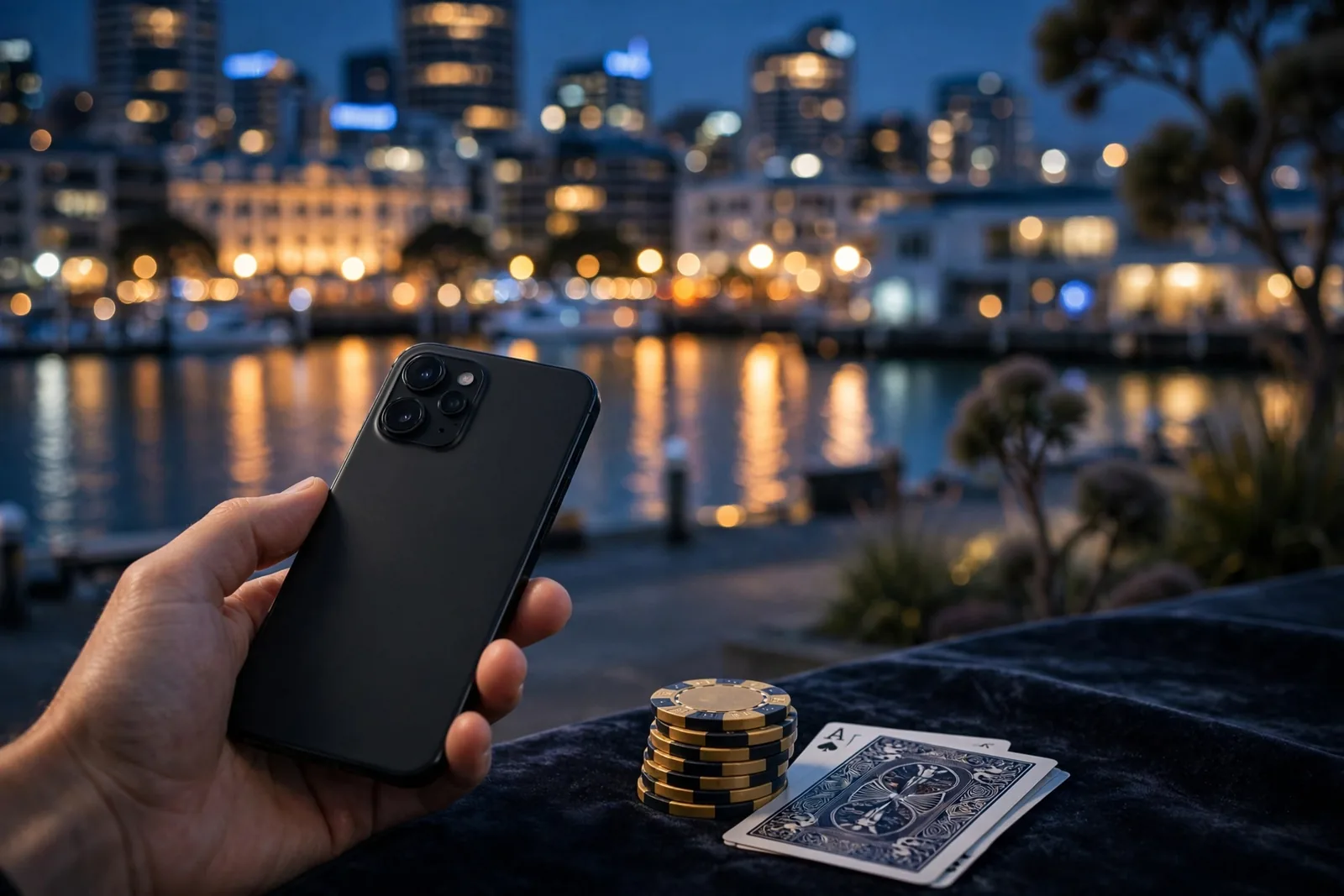
“Free bet” can also refer to more than one thing. It may describe a table variant, or an offer attached to play. The phrase alone does not establish what the table allows or what conditions apply. If you are considering a live dealer free bet blackjack table, read its rules; if the wording refers to an offer, read the offer terms as well. Blackjack may count differently towards wagering requirements, and maximum-bet rules may apply while those requirements are active.
The useful comparison is therefore not simply one variant against another by name. Check the actual rules and separate them from any promotional conditions. A table or offer that sounds familiar can still come with terms that change the decision you are making.
What Changes When You Play With a Live Dealer
Live-dealer blackjack puts a real dealer and physical cards on screen. The game is streamed to you, making the dealing and table activity visible rather than generated by a random-number system. That brings the format closer to sitting at a casino table, though you are still watching through a connection rather than sharing the dealer’s space.
The stream also changes the pace. A delay can interrupt the flow between a decision and the next deal, so a hand may take longer than you expect. Connection problems can make that pause more noticeable. This is part of the format, not a sign that the cards are being dealt differently.
The table may also ask for higher bets than other versions of blackjack. That matters if you are browsing for a live table but do not want to stake more than you intended. Check the displayed minimum before joining, and do not treat the live setting as a reason to stretch your budget.
The useful distinction is straightforward: a live stream shows actual cards being handled by a dealer, while the online experience can involve waiting and a higher entry point. If those trade-offs suit you, the format may feel more like a casino table. If you value uninterrupted, quicker play, the pauses may be a drawback.
Can you beat online blackjack by counting cards?
Card counting can help you track how the remaining cards affect the odds, but it does not guarantee a win. Online RNG blackjack uses software shuffles and allows faster play than live dealer games, which use actual cards.
What is card counting?
Card counting is mentally tracking the cards that have been dealt to estimate how the remaining cards affect your chances. Counting cards using only mental calculation is not illegal under New Zealand law.
Is card counting illegal?
No. Counting cards using only mental calculation is not illegal under New Zealand law.
Does blackjack always pay 3:2?
No. A natural blackjack often pays 3:2, but some tables pay 6:5. Check the payout rules for the specific table.
Written by the editors at Casinosbonusesinfo.