Free Blackjack in New Zealand: Rules and Play
 Available in US
A practical guide to hand values, table decisions, payouts and free-play formats, with strategy practice kept separate from guarantees.
Table of Contents
- How Blackjack Works: Cards, the Dealer and 21
- Your Moves at the Table: Hit, Stand, Double or Split
- Blackjack Payouts, Table Rules and the Insurance Question
- Free Blackjack for Fun: Online and Multiplayer Play
- Free Blackjack Online in New Zealand: What Changes in 2026
- No Download or Registration: What Free Play Means
- Use a Free Blackjack Simulator to Practise the Basics
- Free Blackjack Without a Deposit: Keep Play Separate from Cash
- Practise Blackjack Strategy Without Treating It as a Guarantee
- Playing Free Blackjack on Restricted or Unblocked Networks
How Blackjack Works: Cards, the Dealer and 21
Blackjack is a contest between you and the dealer. The aim is to finish with a hand total closer to 21 than the dealer’s, without going over 21 yourself. You are not trying to beat the other people at the table: their hands are separate from yours, and the dealer is the opponent each player must compare with.
That simple objective gives the game its shape. You receive cards, work out their total and judge it against the target. The challenge is that the dealer’s eventual total is not known while you are playing. A hand that looks strong can still go over 21, while a lower total may be enough if the dealer finishes lower or exceeds the target. The result depends on both hands, not on reaching 21 at any cost.
How card values work
Number cards count as the number printed on them. A card marked with a lower number adds that value to your hand; a card marked with a higher number adds more. Face cards—jacks, queens and kings—each count as 10. The suit does not change a card’s value in blackjack.
An ace is different because it can count as either 1 or 11. Its value is chosen in the context of the other cards in the hand. If counting it as 11 would take the total above 21, it can count as 1 instead. That flexibility is useful, but it does not make every hand safe: the rest of the cards still determine whether the total stays within the target.
For instance, an ace with a 7 can be counted as 8 or 18. If another card would make the higher total exceed 21, the ace can instead count as 1, keeping the hand within the limit. By contrast, a hand made up of a 9 and an 8 totals 17, with no ace available to adjust the count. These examples show why it helps to keep track of both the total and whether an ace can be counted in either way.
A hand containing an ace counted as 11 is often called a soft hand. It is “soft” because the ace can change to 1 if needed. A hand with no ace, or with an ace that must count as 1 to avoid exceeding 21, is described as hard. These terms are useful shorthand for understanding a hand, rather than separate goals or different kinds of cards.
Comparing hands with the dealer
Once the hands are complete, their totals are compared with the aim of being closer to 21 without going over. A total of 21 is the target, but a hand does not have to reach it to be in contention. If your hand exceeds 21, it has gone beyond the limit; having a higher number is not an advantage in that case.
The dealer matters because your result is measured against the dealer’s hand, not against a fixed score alone. A total that is below 21 might beat the dealer’s lower total, but it would not beat a dealer hand closer to 21. If the dealer also goes over 21, that changes the comparison. In short, the target sets the boundary, while the dealer’s hand determines how your surviving total fares.
This is why blackjack is not simply a race to collect the largest possible total. Every card contributes to a running sum, and the ace can make that sum more adaptable. But once a hand crosses 21, it has missed the objective. Knowing the values is the first step in understanding why the same card can be helpful in one hand and risky in another.
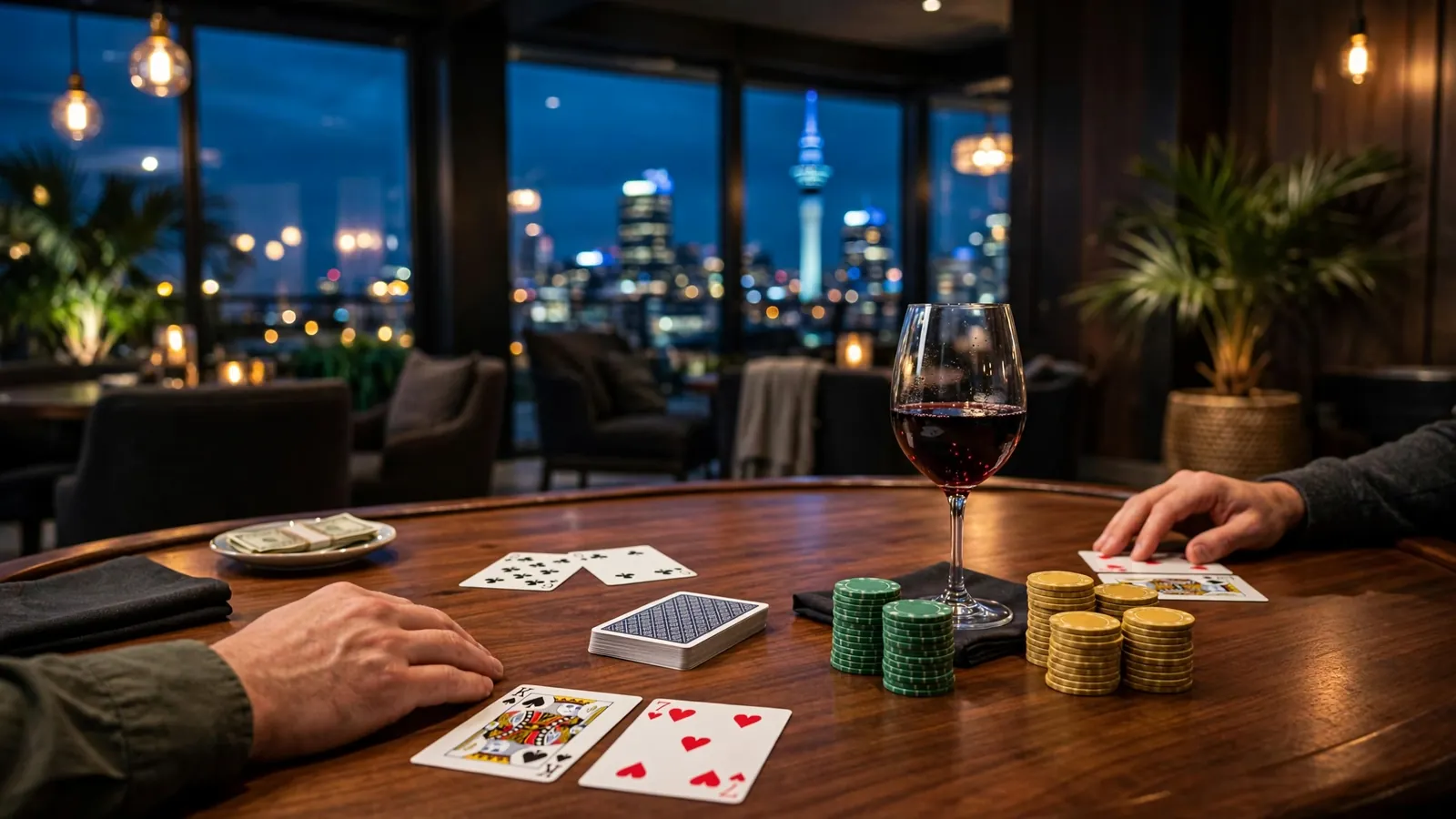
A “natural blackjack” is a particular term used for a starting hand that reaches 21 with an ace and a card worth 10. It is distinct from reaching 21 after receiving more cards. The difference matters in discussions of table rules and payouts, but the basic point here is the total: the ace counts as 11 alongside the 10-value card. A hand can also reach 21 in other ways, though the route to that total may affect how it is treated under a game’s rules.
For someone trying a free blackjack game, the same basic arithmetic applies as at a table where money is involved. Free play can let you become familiar with how card values add up, but it does not change the objective or make the dealer irrelevant. Whether you see the cards on a screen or at a table, the foundation remains the same: count the hand, account for any ace that can take either value, and compare your final total with the dealer’s without exceeding 21.
That foundation is enough to follow a hand without confusing card values with the choices a player may later make. The face value of a card, the flexible ace and the 21-point limit explain what the totals mean. Understanding those basics makes the rest of blackjack easier to read, whether you are watching a game or considering a free version for a first look.
Your Moves at the Table: Hit, Stand, Double or Split
Once a blackjack hand is under way, your choices shape how it develops. You can ask for another card, stop taking cards, increase your stake under the table’s rules, or divide a pair into separate hands. Some tables also allow surrender, which lets you give up a hand rather than continue. The options available can depend on the game, so the controls and rules shown at the table matter.
Hit: take another card
A hit means asking for another card. You might choose it when you want to improve your hand, but every additional card also brings the possibility of going over 21 and losing the hand. The decision is yours until you stand, reach the table’s limit or otherwise end your turn under the rules.
In an online game, the hit control may be a button on screen. In a live-dealer game, you make the choice through the game interface while the dealer conducts the hand. The action is the same: you are asking to receive another card. If you are playing free blackjack, it is a chance to see how a decision changes the hand without placing cash at stake; it does not change what the table’s rules permit.
Stand: take no more cards
Standing means you are finished taking cards for that hand. The dealer then continues according to the game’s procedure, and the hand is settled against the dealer’s result. You may stand because you are content with your hand or because another card could make it worse. Neither choice guarantees an outcome: the dealer’s hand has not yet been resolved.
The distinction between hitting and standing is straightforward, but the timing can matter. Once you stand, you cannot ask to hit again on that hand. In free play, you can watch how different choices lead to different results, but a favourable result in one hand does not establish that the same move will work next time.
- Use hit to improve a weak hand
- Stand when content with your total
- Check on-screen rules before acting
- Hit if another card likely exceeds 21
- Assume a stand guarantees a win
- Rely on previous results for next moves
Double down: raise the stake and take a card
Doubling down is a way to commit more to a hand in exchange for receiving another card, after which your turn generally ends. The exact conditions for doubling are set by the table. Some games restrict when the option is available, so it may not appear for every hand.
That makes it worth checking the on-screen rules before using the control. A double is not simply another hit: it changes the stake as well as limiting what you can do afterwards. In a free game, the stake may be simulated, but the decision still illustrates the trade-off between committing more and giving up further choices. In a cash game, the financial consequence is real, so do not treat a practice result as a reason to raise your stake.
Split: play a pair as separate hands
If your starting cards form a pair, the table may let you split them into separate hands. Each hand is then played on its own, with its own decisions and result. Splitting can therefore turn one hand into two; it does not make either outcome certain.
Rules for splitting vary. A table may limit whether you can hit or double after a split, or set other conditions for how the new hands are played. Read the rules rather than assuming that every blackjack game handles a split in the same way. This is particularly useful when moving between variants: the same choice can lead to different available actions under different rules.
Surrender: stop playing the hand
Some tables offer surrender, allowing you to give up a hand instead of continuing. Whether it is available, and when you may use it, depends on the table’s rules. Check the wording displayed in the game; the option may be absent or restricted.
Do not assume that surrender means the same thing at every table. Its precise effect is part of the rules, so understand what the game says before choosing it. If the option is not shown or the rules are unclear, you cannot safely infer that it is available.
Read the controls before deciding
Online blackjack presents these choices through buttons or prompts, but the labels do not replace the rules. Before you act, confirm which options are available for the hand and what each one changes. A hit asks for another card; a stand ends your turn; a double changes your stake and limits your next action; a split creates separate hands; surrender, where allowed, ends the hand under the table’s conditions.
Free blackjack can help you become familiar with the sequence of decisions, including in a two-player game where you can compare choices with another person. Treat it as a way to learn the controls, not as evidence that a particular move will always be right. Rules differ between tables, and the choice that makes sense depends on the hand and the options actually offered.
Blackjack Payouts, Table Rules and the Insurance Question
A blackjack table’s payout display is part of its rules, not a detail to leave until after you have chosen a game. A natural blackjack—a two-card hand that totals 21—may be paid differently from a win made with more cards. One specialist review describes natural-blackjack payouts of 3:2 at some tables and 6:5 at others. That is a report about the tables it reviewed, not a reliable description of every game available.
Natural blackjack payouts can vary between tables, commonly appearing as 3:2 or 6:5 ratios.
The ratio shows the profit relative to the original stake, with the stake returned as well. A lower natural-blackjack payout means less back for the same winning hand. If you are comparing games, read the payout terms on the table itself rather than assuming that every version uses the same schedule. The label “free bet blackjack” can also be unclear: it may refer to playing without staking cash, or to a particular wagering offer. Those are different arrangements. In free play, a displayed payout can help you understand how the game settles a hand, but it does not turn the play into a cash win.
Rules beyond the headline payout matter, too. A specialist review notes that games can differ in deck count, in whether the dealer hits or stands on soft 17, in surrender availability and in blackjack payouts. A soft 17 is a hand containing an ace counted as 11 without the total going over 21. Whether the dealer takes another card on that hand changes how the round proceeds. The number of decks and the surrender rule also affect the decisions available and the game’s overall conditions. Blackjack variants do not all produce the same strategic picture or house edge.
These details are worth checking together. A game with an appealing natural-blackjack payout may have other rules you dislike; a familiar table layout does not establish that its rules match another version. Look for the payout schedule and rules before starting, particularly if the game’s description uses a special label or the table offers a variant.
Insurance is another rule that can make a table look more complicated than it needs to be. It is an optional side wager offered when the dealer’s visible card is an ace, based on the possibility that the dealer has a natural blackjack. It is separate from your main hand: taking it does not improve that hand or change its total. The offer may sound like protection, but it is still a wager with its own outcome. For most players, it is not a sound default bet; declining it keeps the decision focused on the main hand rather than adding another stake.
If you are playing for fun, a practice table can help you see how different rules affect the settlement of a hand without putting cash at risk. Keep that distinction clear: a free-play result is useful for learning the interface and rules, not evidence that a particular payout or wager would be favourable with money involved.
Free Blackjack for Fun: Online and Multiplayer Play
Playing blackjack online for free can make the game available as a casual pastime, without turning every session into a wager. The experience depends less on the word “free” than on how the game is run: some versions deal from software, while live-dealer tables use a human dealer and physical cards. Both can resemble a casino table, but they move at different speeds and create different kinds of interaction.
In an RNG game, the cards are shuffled by software. Hands can follow one another quickly because there is no physical deal or video stream to wait for. That pace suits a short session or a relaxed game in which you want to keep the action moving. It can also feel solitary: other players may not be part of the game, even if the screen uses a table layout.
Live-dealer blackjack is closer to watching a real table. A dealer handles actual cards, while a stream shows the deal and the table. This can make the game feel more social and less like a sequence of software screens. The trade-off is pace. A stream can introduce delays, and the deal cannot move faster than the live table. Live games may also require higher bets, so a free version should not be assumed to be available just because a live-dealer option exists.
“Multiplayer” can mean different things in online blackjack. It may refer to several people sharing a live table, or to a game that places you among other players in the interface. In either case, the other players do not change the basic format into a contest against them: blackjack remains a game centred on the dealer. Before joining, look at whether the game is genuinely shared, or whether the multiplayer element is mainly visual or chat-based. Availability and features vary between games.
A free version can be useful when you simply want to enjoy a few hands and see how an online table feels. It may also let you compare the brisk rhythm of an RNG game with the pauses and presentation of a live stream. Do not assume, however, that a free mode reproduces every feature of a paid table. The interface, pace and available options may differ, and the label alone does not establish what is included.
For an easygoing session, choose a format that matches the mood. Software-dealt play is the quicker option; a live dealer offers physical cards and a more table-like setting, with streaming delays as a possible cost of that realism. If the point is company, check what “multiplayer” means in that particular game rather than relying on the label. If the point is simply to play for fun, a straightforward solo game may be enough.
Free Blackjack Online in New Zealand: What Changes in 2026
Choosing where to play free blackjack in New Zealand in 2026 starts with finding an option that suits what you want to check before playing for real. This list gives you a concise reference to the available operator details.
License: Malta Gaming Authority, licence no. MGA/B2C/394/2017 N1 Casino lists a Malta Gaming Authority licence, number MGA/B2C/394/2017. You can use that detail as a reference when considering the operator.
Payout speed: 1-3 business days Lamabet states a payout speed of 1–3 business days. That gives you a stated timeframe to consider when reviewing the operator.
Payout speed: 1-3 business days Wintino states a payout speed of 1–3 business days. You can take this timeframe into account when considering the operator.
License: Malta Gaming Authority, licence no. MGA/B2C/370/2017 Play Grand lists a Malta Gaming Authority licence, number MGA/B2C/370/2017. This licence detail may help you assess the operator.
License: Tobique Gaming Commission, licence no. 0000091 7Bit Casino lists a Tobique Gaming Commission licence, number 0000091. You can refer to this information when considering the operator.
License: Tobique Gaming Commission, licence no. 0000064 Neospin lists a Tobique Gaming Commission licence, number 0000064. This is the available licensing detail for you to review.
License: Tobique Gaming Commission, licence no. 0000002 Ricky Casino lists a Tobique Gaming Commission licence, number 0000002. You can use this information as a reference when assessing the operator.
License: 07017519840 · Payout speed: 1-3 business days Zotabet lists licence number 07017519840 and states a payout speed of 1–3 business days. These are the available details to consider when reviewing the operator.
License: Curaçao Gaming Authority, licence no. OGL/2024/165/0185 BitStarz lists a Curaçao Gaming Authority licence, number OGL/2024/165/0185. You can refer to this licensing detail when considering the operator.
A free blackjack game may look much the same on screen whether you access it from New Zealand or elsewhere. The legal setting around online casino services, however, changed in 2026. The key distinction is not a new blackjack rule; it is the start of New Zealand’s first domestic licensing system for online casino gambling.
The Online Casino Gambling Act 2026 took effect on 1 May 2026. It establishes a framework for licensing and regulating online casino providers. The Department of Internal Affairs (DIA) oversees that framework and remains New Zealand’s primary gambling regulator. The Gambling Commission has a separate licensing role: it considers casino licence applications, makes decisions on them, issues online casino licences and approves changes to licence conditions.
This is a change from the previous arrangement. Under the Gambling Act 2003, online casinos could not be based in New Zealand. Before the 2026 Act, overseas online casino gambling was not licensed or supervised by a New Zealand regulator. A customer who wagered with an offshore site during that period had no domestic government recourse if a dispute arose. The new Act creates a route to local licensing; it does not mean every online casino is already licensed.
Legal Risk
Providers operating without a licence in New Zealand may face enforcement action and fines of up to NZ$5 million.
There is a transition between the new law taking effect and the full system operating. Providers that were already offering services to people in New Zealand before 1 May 2026 may continue during the transition, which runs until 1 December 2026. That permission is temporary, not a general approval for any site to operate. Providers that have not applied for a licence must stop offering online casino gambling in New Zealand by the end of that period. The full licensed regime is not expected to be operational until 2027, and unlicensed operation is expected to become an offence around the middle of that year.
The rules also matter for how services are promoted. During the transition, providers are prohibited from advertising online casino gambling to people in New Zealand. Once licensed, operators may advertise only within tight rules, and sponsorships are prohibited. Licensed operators must also use stricter age and identity checks. Providers operating without a licence may face enforcement action and fines of up to NZ$5 million; if an application is declined, the provider must stop its online casino operations in New Zealand and leave the market.
For someone looking for free blackjack online, the practical point is to separate a game’s free-play mode from the regulatory status of the service offering it. A free mode does not establish that a provider holds a New Zealand licence, nor does the presence of a licensing framework mean the complete system is already in place. The transitional rules apply to providers and their operations, so the date and the provider’s position in that process matter.
The 2026 change therefore gives New Zealand a domestic licensing structure where none existed before, but the transition is not the finished regime. The DIA oversees the system, while the Gambling Commission decides licensing matters. Those roles are distinct, and neither should be mistaken for a blanket endorsement of every site where a free casino blackjack game appears.
No Download or Registration: What Free Play Means
Browser-based blackjack can be opened in a web page rather than installed as a separate program. That is the practical meaning of “no download”: you do not need to add a dedicated game file to your device before you can try the browser version. It can suit someone who wants to avoid installing software or is using a device where downloads are inconvenient.
“No registration” is a separate claim. It means access is offered without first creating an account, but you should not assume that every free game works this way. A page may ask you to register, or it may provide a limited preview before requesting details. Conditions can differ between services, so read what the page says before entering personal information or proceeding to another part of it. A free-play label alone does not establish what details, if any, are required.
The distinction between free play and real-money gambling matters here. A game that opens in a browser may still have other modes or links alongside it. Check that you are entering a play-for-fun mode and not moving into a wagering environment. Avoid providing payment details just to explore a game presented as free; if the page’s terms are unclear, there is no need to continue.
Browser access also does not tell you exactly how the game runs. Online RNG blackjack uses software shuffles and can move faster than a live-dealer game, where cards are dealt in a streamed setting. Those are different formats, but neither label answers whether a download or account is needed. Look for the access conditions on the specific page rather than inferring them from the style of play.
A separate downloadable game may be described as freeware, but that word does not by itself explain what is included, whether the program is maintained, or what permissions it requests. If you choose to install anything, consider the source and the access it asks for. For a casual trial, a browser page may avoid that installation step, though it does not remove the need to check the page’s terms and privacy information.
The main appeal of free blackjack with no download or account is a simpler start: open a page and see whether it suits you. Treat that as a convenience, not a guarantee that every game is anonymous, available in every browser, or free of conditions.
Use a Free Blackjack Simulator to Practise the Basics
A blackjack simulator gives you a place to pause over a hand and consider what to do next. Rather than relying on a quick impression, you can follow the cards, check their values and make a decision at your own pace. That makes free play useful for learning the routine of a hand, even if it cannot promise that a particular choice will produce a good result.
Start by keeping the values in view: numbered cards count as shown, while jacks, queens and kings each count as ten. An ace can be treated as either one or eleven, depending on which value fits the hand without taking it over twenty-one. That flexibility can make a hand harder to assess at first, so take a moment to work out both possibilities before choosing a move.
When the simulator presents a decision, think through the options rather than clicking automatically. You may be able to take another card, stand, double down or split a pair, depending on the game. The point of practice is not simply to learn where the buttons are. It is to notice what your hand contains, what decision is available and why you are choosing it. If you are unsure, pause and calculate the total again.
Practising a Hand
Determine the value of each card, remembering that face cards are 10 and aces are 1 or 11.
Work out the running sum and account for any flexibility if you have an ace.
Check if you can hit, stand, double down, or split based on the current hand and table rules.
Make a deliberate decision and consider whether the reasoning was sound after the hand ends.
A simple routine can help: identify the value of each card, account for an ace’s possible values, then review the available actions before selecting one. After the hand ends, consider whether you understood the decision at the time. A win does not prove that the choice was sound, and a loss does not by itself show that it was wrong. Blackjack includes uncertainty; a simulator can help you rehearse the reasoning, not remove that uncertainty.
You can also use repeated hands to spot where you hesitate. Perhaps you forget that an ace may count as one, or overlook that two matching cards may allow a split. Treat those moments as prompts to revisit the rules, not as evidence that you need a betting system. The useful result is clearer thinking about the hand in front of you.
A free blackjack simulator is therefore best approached as a practice table: slow down, check the card values and make each decision deliberately. Keep the focus on understanding the choices, rather than trying to predict what the next card will be.
Free Blackjack Without a Deposit: Keep Play Separate from Cash
A no-deposit search can mean two different things: a blackjack game that costs nothing to play, or a promotion that offers something of value without an initial payment. They are not the same. Free-play access lets you play without staking cash; a promotion may come with conditions and may involve wagering before anything can be withdrawn.
If your aim is simply to play blackjack for free, check what the game itself requires before starting. A browser game may open without a download, but that convenience does not establish that every feature is free or that registration is unnecessary. Read the on-screen terms, especially if the site also offers real-money play. Do not assume that a “no deposit” label means there are no conditions.
Keep any free session separate from cash play. In an RNG game, software shuffles the cards, and hands move faster than in live-dealer play. That can make it easy to continue without pausing to consider whether you are still playing for fun. If a page switches from free play to a cash option, treat that as a separate decision rather than a continuation of the same game.
Promotional terms matter if you choose to engage with an offer. Check whether blackjack contributes differently to wagering requirements and whether maximum-bet rules apply while wagering. These conditions can change what an offer means in practice; the word “free” does not settle that question. If the terms are unclear, leaving the offer unused is a reasonable choice.
Set a budget before any real-money play and do not chase losses. Free blackjack can be a way to enjoy the game without risking cash, but it does not turn a later wager into a cost-free one. Keep the distinction clear: playing without a deposit means no initial payment is needed for that activity; it does not guarantee that a promotion is available, unconditional or withdrawable.
Practise Blackjack Strategy Without Treating It as a Guarantee
A strategy card can give you a consistent reference for decisions, but it is not a universal set of instructions. Blackjack variants differ in their rules, and those differences can change which decisions are preferable and how the house edge is affected. A chart made for one version may not fit another. Before relying on one, compare its assumptions with the rules of the game you are practising.
Free online play can help you work through decisions without putting money at risk. Treat it as rehearsal, not evidence that a particular approach will produce a profit. A run of favourable results does not establish that a strategy is effective, just as an unfavourable run does not by itself show that every decision was wrong. Focus on whether you followed the guidance that applies to the variant, rather than judging a method by a short session.
Card counting is a separate idea from following a strategy chart. It involves keeping a mental tally of cards already dealt and using that information to inform decisions. Mental card counting is not illegal under New Zealand law. That narrow legal point does not mean it is effective or welcome in every setting, or that it can guarantee an advantage.
Online games that automatically shuffle the cards are a particular limitation: a mental count cannot provide a dependable picture of cards remaining when the sequence is repeatedly reset. Practising a count in that setting should not be mistaken for a reliable way to improve results. Nor does legality make a method successful.
If you move from free practice to wagering, keep the distinction clear. Set a budget you can afford to lose and do not chase losses by increasing it. If play is subject to wagering requirements, check how blackjack contributes and whether maximum bet rules apply while those requirements are being met. Strategy can help you make decisions more consistently, but it cannot remove the risks or turn a game into a guaranteed outcome.
Playing Free Blackjack on Restricted or Unblocked Networks
A search for free blackjack on a restricted network can mean two different things: finding a game that costs nothing to play, or trying to reach a site that the network does not allow. Those are separate issues. A free game is not automatically accessible on every connection, and describing a site as “unblocked” does not establish that it will work on your school, workplace or other managed network.
Network restrictions are set by the organisation or service controlling the connection. A game may be unavailable because its site or category is filtered, even if the game itself does not involve wagering. Trying to get around that control may conflict with the network’s rules, so check the applicable policy rather than treating an “unblocked” label as permission. No particular blackjack site can be assumed to bypass a restriction.
The game itself remains straightforward: you play against the dealer and try to finish closer to 21 without going over. In a free version, you can focus on the hand in front of you without placing a cash wager. That does not change the network’s access rules, nor does it make a restricted connection a suitable place to play.
If access is blocked, the practical options are limited: use a connection where the activity is permitted, or leave the game for another time. Avoid installing tools or changing network settings simply because a page promises unrestricted access. That promise may say little about whether the game is safe, whether it is genuinely free, or whether using it complies with the rules of the connection.
It is also worth separating a technical block from a problem with the game. A page that fails to load may be filtered, unavailable, or affected by the connection; the failure alone does not show which. Do not enter personal or payment details just to make a supposedly free game load. If you only want a casual hand, use an access route permitted by the network and keep the play separate from real-money gambling.
Prepared by the Casinosbonusesinfo editorial staff.