Blackjack Tables in New Zealand: Rules and Play
 Available in US
Understand the dealer-versus-player format, core decisions, table variations, and how rules influence blackjack strategy.
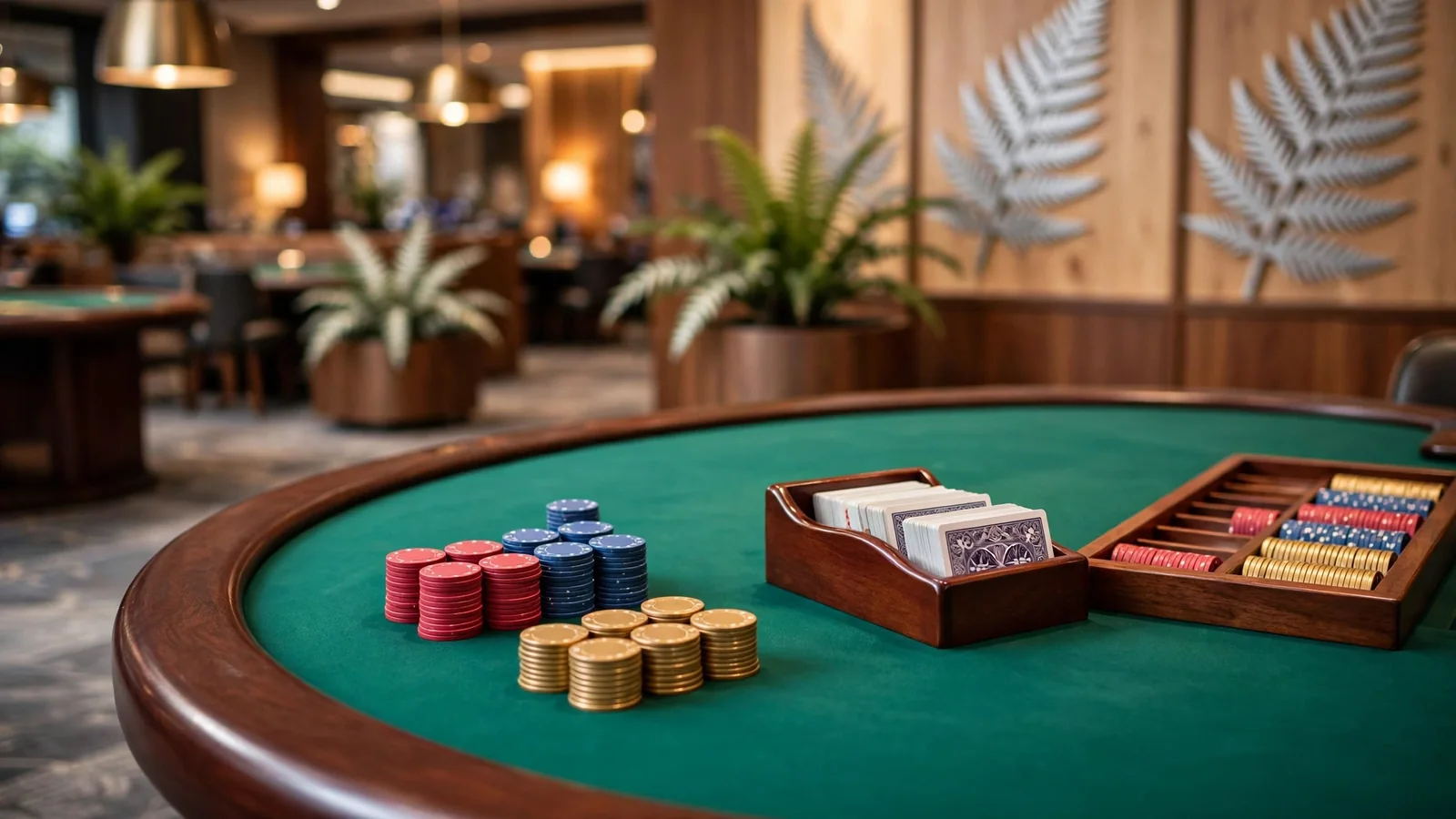
Table of Contents
- How a Blackjack Table Works
- Blackjack Rules, Payouts and Table Variations
- Online Blackjack Tables in New Zealand: What Changes in 2026
- How Table Rules Shape Blackjack Strategy
- Bets, Chips and Electronic Blackjack
- When to Hit, Stand, Double or Split
- Choosing a Seat at the Blackjack Table
- Reading a Blackjack Table Chart
- What a Blackjack Cheat Sheet Can—and Cannot—Tell You
- Understanding Blackjack Table Limits and Minimum Bets
How a Blackjack Table Works
Blackjack is a contest between each player and the dealer, not a competition among the people seated at the same table. The aim is to finish with a hand value closer to 21 than the dealer’s hand, without going over 21. That simple comparison is the centre of the game, whether you are sitting at a casino table or joining a game online.
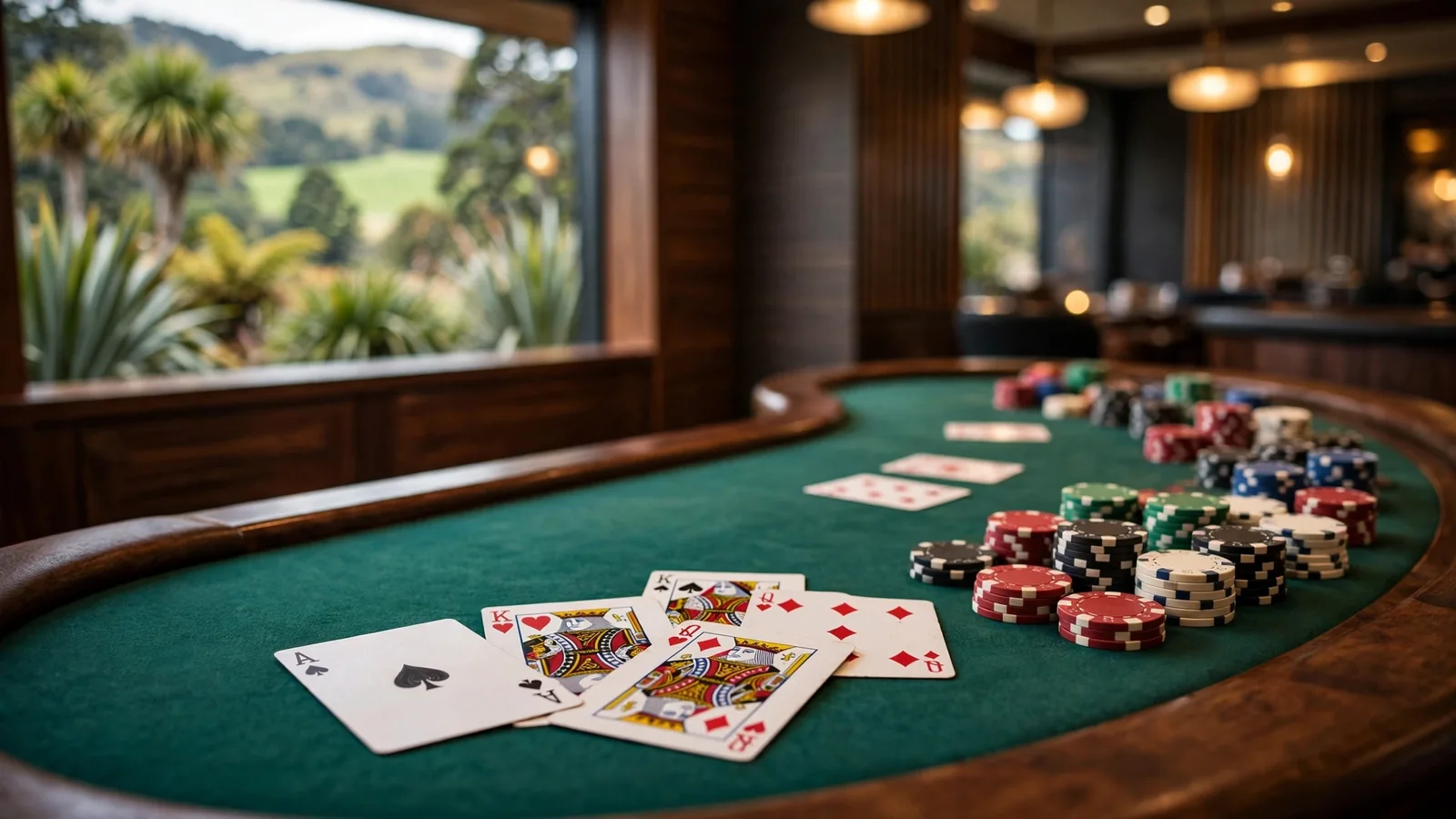
A casino blackjack table brings the dealer and several players into one shared game. Each player makes decisions about their own hand, while the dealer represents the opposing hand. The other players’ cards and choices may be visible, but their totals do not replace the dealer as your opponent. If you are new to blackjack, that distinction is useful: the task is not to beat the person next to you or to make the table’s combined total reach 21. It is to compare your hand with the dealer’s at the end of the round.
The felt surface and the people around it make a live table feel social, but blackjack remains an individual contest within a common round. You can watch other hands while concentrating on your own. Their presence can make the pace and atmosphere feel different from playing alone, but it does not change the objective. Nor does the label “21 blackjack” describe a separate goal: 21 is the target value in the familiar name for the game, while going over it means you have exceeded the target.
What makes a live table live
At a live blackjack table in a casino, the dealer handles physical cards. In an online live-dealer game, the cards are physical too: a dealer conducts the game, and a video stream lets you follow the action remotely. This is different from an online game in which software generates and deals the cards. The screen may look similar, but the source of the cards and the way the game is presented are not the same.

A live stream gives you a view of an actual dealer and actual cards rather than a purely software-rendered table. That can make the experience feel closer to being in a casino, although it is still mediated by a screen and an internet connection. The camera shows the game; it does not put you in the room. You do not share the table physically with the dealer or other remote participants.
Streaming also affects the rhythm. A live game can take longer to move from one part of a round to the next because the action is being dealt and shown in real time. The connection may add delays, too. Some live tables may also require higher bets than other online formats, so the live presentation is not automatically the most suitable option for every budget. The specific conditions depend on the table you are considering.
At a land-based casino, the table itself is the shared physical setting: the dealer and players are gathered around it, with the cards dealt in front of them. Online, the same basic contest can be presented in two different ways. A live-dealer table streams a human dealer handling cards; a software-based table presents a digital game without a live card deal. Both are online blackjack, but they do not offer the same kind of interaction or pace.
What an online table changes
An online blackjack table removes the need to be physically present at a casino. In a live-dealer game, you watch the streamed table and take part remotely. In a software-based game, the table is represented on screen and the cards are generated by the game. The shared element is the contest against the dealer and the aim of ending closer to 21 without exceeding it.
The screen can compress the space that a physical table occupies. You may see the dealer’s area, your hand and the game’s controls on one display, but the exact presentation varies. What matters is not whether the graphics resemble green felt or a casino room; it is whether you are watching a live card game or interacting with software. A polished interface cannot, by itself, tell you which format is in use. Look at how the game is described before joining.
A polished interface cannot, by itself, tell you which format is in use; you should look at how the game is described before joining.
A free casino blackjack table can be a way to become familiar with the on-screen presentation without staking real money, if that option is available. It is still worth paying attention to the format: a free software game and a free live-dealer stream may feel quite different. Practice can help you understand where information appears on the screen, but it does not turn a simulated game into a live table or establish how you will experience every real-money game.
The word “table” therefore covers more than one setting. It can mean the physical surface in a casino, a streamed live-dealer game, or the digital interface of a software game. The common purpose remains clear: you play against the dealer and try to finish nearer to 21 without exceeding it. Beyond that, the experience depends on whether actual cards are dealt in front of a camera or the game is run through software, and on the pace and conditions of the particular table.
Blackjack Rules, Payouts and Table Variations
Blackjack rules start with the value of the cards. Number cards count at face value, while jacks, queens and kings each count as ten. An ace can be valued as either one or eleven, depending on which value helps the hand without taking it over twenty-one. A hand containing an ace counted as eleven is often called a soft hand; if the ace has to count as one to avoid exceeding twenty-one, the hand is hard.
The aim is to finish closer to twenty-one than the dealer without going over. Going over is a bust, and the hand loses. A hand made from an ace and a ten-value card on the initial deal is a natural blackjack. It is distinct from reaching the same total with additional cards, a difference that matters when the payout is settled.
During a hand, the available actions can include hitting, standing, doubling down and splitting. Hitting means taking another card; standing means keeping the current total. Doubling down lets a player increase the wager under the table’s conditions and receive a further card. Splitting is available when the initial cards form a pair: the cards are separated into hands, each played on its own. Some tables also permit surrender, which allows a player to give up a hand under specified conditions and forfeit part of the wager rather than continue.
These options are not guaranteed to be available in identical form everywhere. In particular, a table may allow surrender or exclude it, and the conditions for doubling or splitting can differ. The rules displayed at the table take precedence over assumptions based on another game. If a particular action is not offered in the interface or dealer procedure, it is not an available choice for that hand.
Attention Rules displayed at the table take precedence over assumptions based on another game.
Payout terms and dealer rules
A payout describes what is returned when a hand wins; it is not the same as the value of the cards. A natural blackjack may receive a different payout from an ordinary winning hand. A specialist review describes tables where a natural pays at a 3:2 rate and others where it pays at 6:5. Those terms should be checked on the specific table rather than treated as a universal rule. The difference affects the return attached to a natural, even though the cards and the hand’s total are unchanged.
The table may also state how the dealer plays a soft 17. A soft 17 is a dealer hand totalling seventeen with an ace counted as eleven. Under one rule the dealer must draw another card; under another the dealer stands. This is a rule about the dealer’s required action, not an option for the player. A specialist review notes that dealer treatment of soft 17, deck count, surrender rules and blackjack payouts can vary between games. Read the displayed rules as a package: a familiar game name alone does not tell you which conditions apply.
Deck count refers to how many decks of cards are used in the game. It can differ from table to table, including in casino blackjack, so it is worth checking the game information rather than assuming that all tables use the same setup. The deck count does not change the printed value of a card, but it is one of the conditions that distinguishes one ruleset from another.
What to check before a hand
Look for the rules covering natural-blackjack payouts, soft 17, surrender, doubling and splitting, as well as the number of decks. If a payout is described in ratio form, make sure you know whether it applies to a natural blackjack or to other winning hands too. Similar-looking tables can therefore settle the same card total differently.
“Table price” can also be an imprecise way to describe the cost of playing. Blackjack is not a fixed-price purchase: the relevant terms are the wager you choose and the payout attached to the outcome, while table limits are a separate matter. The useful guide is the rules and payout information shown for that game, not an assumed standard shared by every casino table.
Online Blackjack Tables in New Zealand: What Changes in 2026
Choosing a blackjack table in New Zealand means weighing what matters to you before you play. Use these operator details as a starting point when considering your options.
License: Malta Gaming Authority, licence no. MGA/B2C/394/2017 N1 Casino is listed with a Malta Gaming Authority licence, no. MGA/B2C/394/2017.
Payout speed: 1-3 business days Lamabet lists a payout speed of 1–3 business days, a useful detail to consider when choosing where to play.
Payout speed: 1-3 business days Wintino lists a payout speed of 1–3 business days, giving you a stated timeframe to consider.
License: Malta Gaming Authority, licence no. MGA/B2C/370/2017 Play Grand is listed with a Malta Gaming Authority licence, no. MGA/B2C/370/2017.
License: Tobique Gaming Commission, licence no. 0000091 7Bit Casino is listed with a Tobique Gaming Commission licence, no. 0000091.
License: Tobique Gaming Commission, licence no. 0000064 Neospin is listed with a Tobique Gaming Commission licence, no. 0000064.
License: Tobique Gaming Commission, licence no. 0000002 Ricky Casino is listed with a Tobique Gaming Commission licence, no. 0000002.
License: 07017519840 · Payout speed: 1-3 business days Zotabet lists licence identifier 07017519840 and a payout speed of 1–3 business days.
License: Curaçao Gaming Authority, licence no. OGL/2024/165/0185 BitStarz is listed with a Curaçao Gaming Authority licence, no. OGL/2024/165/0185.
An online blackjack table may use a random number generator (RNG) or a live dealer. The difference affects how the game is delivered: an RNG game uses software to shuffle and deal, while a live game shows a dealer handling actual cards through a video stream. Neither format removes the need to check the game’s rules and conditions before you play.
RNG blackjack generally moves faster because there is no live dealer or video stream to wait for. The software handles the deal, and you make your choices on screen. Live blackjack is closer to a casino table in its use of physical cards, but the stream can add pauses. A connection delay or a break in the broadcast can interrupt the pace, and live tables may require higher bets than software games. Those are practical differences, not evidence that one format offers better chances of winning.
The interface also changes what you see. In a live game, the dealer and cards are shown on screen; in an RNG game, cards appear through the game software. In either case, the displayed table rules determine the conditions of that particular game. The words “live” and “online” describe how play is presented, not a single set of rules shared by every table.
Licensing Warning
Providers that have not applied for a licence must stop online casino gambling in New Zealand by 1 December 2026.
New Zealand’s licensing transition
The legal setting changed in 2026. The Gambling Act 2003 did not permit online casinos to be based in New Zealand, and domestic online casinos were prohibited. Before the new framework, offshore online casino services were not licensed or supervised by a New Zealand regulator. Customers who wagered with offshore websites during that period had no domestic government recourse.
The Online Casino Gambling Act 2026 came into force on 1 May 2026 and created New Zealand’s first domestic licensing system for online casino gambling. The Department of Internal Affairs oversees the regulatory framework and remains the country’s primary gambling regulator. The Gambling Commission hears and decides casino licence applications, issues online casino licences, and approves changes to licence conditions. These responsibilities are distinct: the Commission makes licensing decisions, while the Department oversees the wider framework.
The Act also provides a transition rather than an immediate move to a fully licensed market. Online casinos that were already serving people in New Zealand before 1 May 2026 may continue operating until 1 December 2026 under the transitional provisions. That permission is limited to providers that were already operating; it is not a general opening for new services. Providers that have not applied for a licence must stop online casino gambling in New Zealand by 1 December 2026. The full licensed regime is not expected to be operational until 2027, and unlicensed operation is expected to become an offence from around mid-2027.
During the transition, licensed operators may advertise only under tight rules, and sponsorships are prohibited. Advertising to people in New Zealand is prohibited during this period. A website being accessible from New Zealand does not, by itself, establish that it holds a New Zealand licence or that the new regime is fully in effect. The transition dates matter: the legal position is changing, but the licensing system is not yet fully operational.
For a reader comparing an online blackjack table with a casino table blackjack experience, there are therefore two separate questions: how the game runs, and what legal framework applies to the provider at that point in the transition. An RNG game may be quicker; a streamed table may involve delays or higher betting requirements. Those features do not answer the licensing question. The 2026 changes establish a route to domestic licensing, while the transitional provisions set out who may continue operating before the full regime takes effect.
How Table Rules Shape Blackjack Strategy
Blackjack strategy is not a set of instructions that applies unchanged at every table. The rules define what the dealer must do and which options you have; those details affect the choices a sound strategy recommends and the house edge, the casino’s mathematical advantage over time. A basic strategy guide is therefore useful only when it matches the game in front of you.
Blackjack strategy is not a set of instructions that applies unchanged at every table, as rules define the house edge and the recommended choices.
A specialist review notes that games can use different numbers of decks, require the dealer either to hit or stand on soft 17, and allow or disallow surrender. These are not decorative details. A soft 17 is a hand containing an ace counted as 11 while the total remains 17; the dealer’s instruction about that hand affects how the game proceeds. Surrender, where offered, lets you give up a hand under the table’s conditions rather than continue it. The rules can change which action is preferable in a given situation, so a strategy reference built for one version may not fit another.
Deck count matters for the same reason: it changes the composition of the game and can influence the calculations underlying strategy. That does not mean you need to calculate probabilities while playing. It does mean that a probability table or strategy guide should be treated as specific to a ruleset, rather than as a universal answer key. If the table’s rules differ from those assumed by the guide, its recommendations may no longer be the right ones.
Payout terms also belong in the comparison. A specialist review reports that a natural blackjack may be paid at 3:2 at some tables and at 6:5 at others. The payout changes the value of a natural hand, and therefore affects the game’s overall house edge even though it does not change the cards you receive. Read the blackjack pay table before playing: it should make clear how a natural is settled and help you distinguish that return from the payment for an ordinary winning hand. A familiar table layout is no substitute for checking the terms.
When comparing games, look at the rules as a package. A table with a particular payout may also have its own dealer rule, surrender policy and deck setup. It is not enough to notice one favourable-sounding condition and assume the rest is identical. The combined rules determine which strategy applies and how favourable the game is relative to another version.
This is also why “basic strategy” should not be confused with a promise of profit. It refers to decisions that are mathematically appropriate for a stated set of rules; it cannot remove the house edge or guarantee the result of a hand. Strategies can reduce avoidable errors, but they cannot make two differently configured games equivalent.
The same caution applies if you are considering a private blackjack table. The label describes the setting, not necessarily a distinct set of blackjack rules or a better mathematical position. Check the actual conditions rather than inferring an advantage from the table being private. What matters for strategy is the rules that govern the game, not how exclusive the room sounds.
A practical comparison starts with the natural-blackjack payout, then checks the dealer’s soft-17 rule, deck count and whether surrender is available. Keep those details together when using a strategy guide. If a game does not match the guide’s assumptions, find guidance for the correct version instead of adapting it by guesswork. That is a more reliable foundation for understanding blackjack table strategy than relying on a familiar name or layout.
Comparing Blackjack Games
- Check the natural-blackjack payout
- Identify the dealer’s soft-17 rule
- Verify the deck count
- Determine if surrender is available
Bets, Chips and Electronic Blackjack
At a live blackjack table, you place a wager in the marked betting area before the hand begins. Physical chips make the amount visible to you and the dealer; once betting closes, they stay in place while the hand is played. If you are new to the table, take a moment to understand where bets go and how the game signals that betting has ended. Avoid handling chips or placing a wager while a hand is in progress.
An electronic blackjack table replaces physical chips and cards with a screen and controls. You select a stake through the game interface, and the display shows the amount assigned to the hand. The process can feel more private and direct, but it also removes some of the pauses and visible cues of a live table. Check the displayed stake before confirming it: a tap or click can commit a wager more quickly than moving chips across felt.
Electronic blackjack can use a random number generator, or RNG: software that determines the card results using software shuffles. RNG games allow faster play than live-dealer games. That pace is worth considering before you begin. More hands can pass in less time, so a stake that seems small in isolation may add up if you keep playing without checking your balance.
Set a budget before opening a game, and treat it as a firm spending limit rather than a target to use up. Decide how long you intend to play as well as how much you are prepared to lose. If the budget is gone, stop; increasing it to recover losses is chasing losses, not a way to change the outcome of earlier hands. A win does not require you to keep playing, either.
If you use a bonus, read its conditions before depositing or wagering. Check how blackjack contributes towards wagering requirements, since its contribution may differ from that of other games. Also look for maximum-bet rules that apply while meeting those requirements. A wager that exceeds a stated maximum may affect eligibility under the bonus terms. The headline offer is only one part of the deal; the conditions govern how it works.
Whether you choose a live table or electronic play, keep the practical checks simple: confirm the stake, know how the game records it, and pause if the pace makes it harder to keep track. Electronic play is not automatically less costly simply because you do not handle cash or chips. A clear budget and a careful read of the terms matter more than the interface.
When to Hit, Stand, Double or Split
During a blackjack hand, your choices affect both the cards you receive and, in some cases, the way your wager is played. The options available depend on the table’s rules, so take a moment to check them before making a decision.
Ask for another card to get closer to 21, risking a bust if the total exceeds twenty-one.
Keep your current total and take no more cards for the round.
Increase your wager to receive one further card, after which you must stand.
Separate a pair of matching initial cards into two hands, requiring a further wager.
Hit means asking for another card. You can keep taking cards, but if their total goes over twenty-one, you bust and lose the hand. Stand means keeping your current total and taking no more cards. The choice between the two depends on your hand, the dealer’s visible card and the rules in force. A blackjack hit-or-stand table can help you compare decisions, but a chart is useful only if it matches the game you are playing.
Double down lets you increase your wager in exchange for receiving a further card, after which you stand. Because this choice changes the amount at stake, check when doubling is allowed and whether the game imposes conditions on the action. Do not treat doubling as a way to recover a previous loss; it is a decision about the current hand, not a reliable betting system.
Split is an option when your first two cards have the same value. You separate them into two hands and play each one in turn, with a further wager required for the new hand. Rules can restrict when you may split or what actions are allowed afterward. Read the table information rather than assuming that every game handles split hands identically.
Some tables also allow surrender, which lets you give up a hand under specified conditions. It is not available everywhere, and the timing and terms matter. If you do not see it described in the rules, do not assume it is an option.
When deciding whether to hit or stand, consider the hand you hold alongside the dealer’s visible card, then apply the rules of that particular game. The same hand can call for different treatment under different rules, so a memorised instruction is not automatically suitable everywhere. No choice guarantees a win: blackjack decisions can improve consistency, but the result of an individual hand remains uncertain.
If you are unsure what an action will do, pause before confirming it. In particular, make sure you understand whether a choice adds to your wager or ends your turn. Taking that moment is more useful than clicking quickly and trying to work out the consequences afterward.
Choosing a Seat at the Blackjack Table
A seat determines where you sit around the blackjack table. It does not, by itself, change the aim of the game: you play against the dealer and try to finish closer to 21 without going over. There is no supported basis for treating one position as a way to improve your odds.
The phrase “best place to sit” can suggest that a particular chair offers a mathematical advantage. A seat may feel better for personal reasons, but that is different from changing the chances of the cards. Treat claims that a position makes you more likely to win with caution unless they come with reliable evidence.
Choose for comfort, not a supposed edge
Practical preferences can still matter. You might prefer a place where you can see the table clearly, follow the action without strain, or feel comfortable taking your turn. Those are reasons to choose a seat for your own experience; they do not establish that the seat affects the outcome.
Choose a seat based on your personal comfort and visibility to ensure a more relaxed experience.
If you are playing with other people, the amount of conversation or activity around you may also influence how relaxed you feel. That is a matter of atmosphere, not an advantage in the game. You do not need to copy another player’s choice of position or assume that a seat is valuable because someone else has selected it.
A blackjack table can look different depending on its layout, so take a moment to identify an available place that suits you. If you cannot see comfortably or feel settled, moving to another open seat may improve your experience. It does not alter the cards or give you control over the dealer’s result.
Keep seat choice separate from game choice
Where you sit and what game you join are separate decisions. A position around the table does not tell you which rules apply, and it should not be treated as evidence that a game is more favourable. If you want to assess a game, look at its terms rather than trying to infer an edge from the seating arrangement.
The simplest answer to “where should I sit?” is therefore personal: choose a place where you can follow the table and feel at ease. The seat can affect your view and comfort; it cannot promise a better result.
Reading a Blackjack Table Chart
A blackjack table chart is a map from the cards in your hand and the dealer’s visible card to an available action. It does not make the decision for you; it helps you locate the relevant situation and see what the chart recommends under the rules it was made for.
Start by identifying how the chart labels hands. Number cards count at face value, face cards count as ten, and an ace can count as one or eleven. A hand whose total can use the ace as eleven without exceeding twenty-one is often called a soft hand. If the ace must count as one to avoid going over, the hand is hard. A chart may also show pairs separately because matching cards can create the option to split.
Next, find your hand along one side of the chart and the dealer’s visible card along the other. The cell where the two meet indicates an action, such as hit, stand, double down or split. Check the chart’s key before reading the cells: abbreviations and colours are not universal, and a symbol may refer to an action available only in certain circumstances.
The important detail is that a chart applies to a particular set of table rules. The number of decks can differ, as can whether the dealer hits or stands on soft seventeen and whether surrender is allowed. Those conditions can change which chart applies and which actions are available. A chart that does not state its assumptions may be difficult to use reliably; compare its rules with the table’s posted information before relying on it.
Treat the chart as a way to interpret a hand, not as a complete description of the game. It may not explain how a table handles every rule or payout, and a cell cannot account for a condition that differs from the chart’s assumptions. If the wording is unclear, ask the dealer or consult the game rules. Reading the labels and matching the rules first is more useful than memorising coloured squares.
Understanding Chart Labels
Number cards count at face value, face cards count as ten, and an ace can count as one or eleven. A soft hand uses the ace as eleven without exceeding twenty-one, while a hard hand requires the ace to count as one.
What a Blackjack Cheat Sheet Can—and Cannot—Tell You
A blackjack cheat sheet is a compact reminder of possible actions, not a way to know what the next card will be or guarantee a favourable result. It can help you recall that you may hit, stand, double down or split when the table allows the relevant move. The decision still depends on the hand in front of you and the rules in force.
Treat a blackjack table cheat sheet as a prompt to check, not as a set of instructions that applies everywhere. Blackjack variants can change the rules, and those differences can affect both strategy and the house edge. A guide prepared for one version of the game may not fit another. Before using it, check whether the table permits the action you are considering and whether its other rules match the assumptions behind the guide.
A short reference is most useful when you already understand the basic terms. If it says to double down, for instance, you should know that this is a distinct action from simply taking another card. If the wording or symbols are unclear, pause and check the table’s own rules rather than guessing during a hand.
A cheat sheet also leaves out context. It cannot account for every table variation, explain why a recommendation changes under different rules, or replace careful decisions. Nor does following it remove the uncertainty inherent in blackjack. A correct reference can help you remember a choice; it cannot make the outcome certain.
Keep the sheet accessible, but give the table rules priority. If the guide and the rules appear to conflict, rely on the rules for what the game permits and avoid treating the guide as universal. Used this way, a quick reference can reduce confusion without pretending to be a complete strategy or a promise of winning.
Understanding Blackjack Table Limits and Minimum Bets
Before joining a game, check its minimum and maximum bet conditions. The minimum is the smallest wager accepted for a hand; the table limit sets the permitted betting range. These terms describe what you can stake at that table, not whether its rules or payouts suit you. A low minimum does not, by itself, make a game better value.
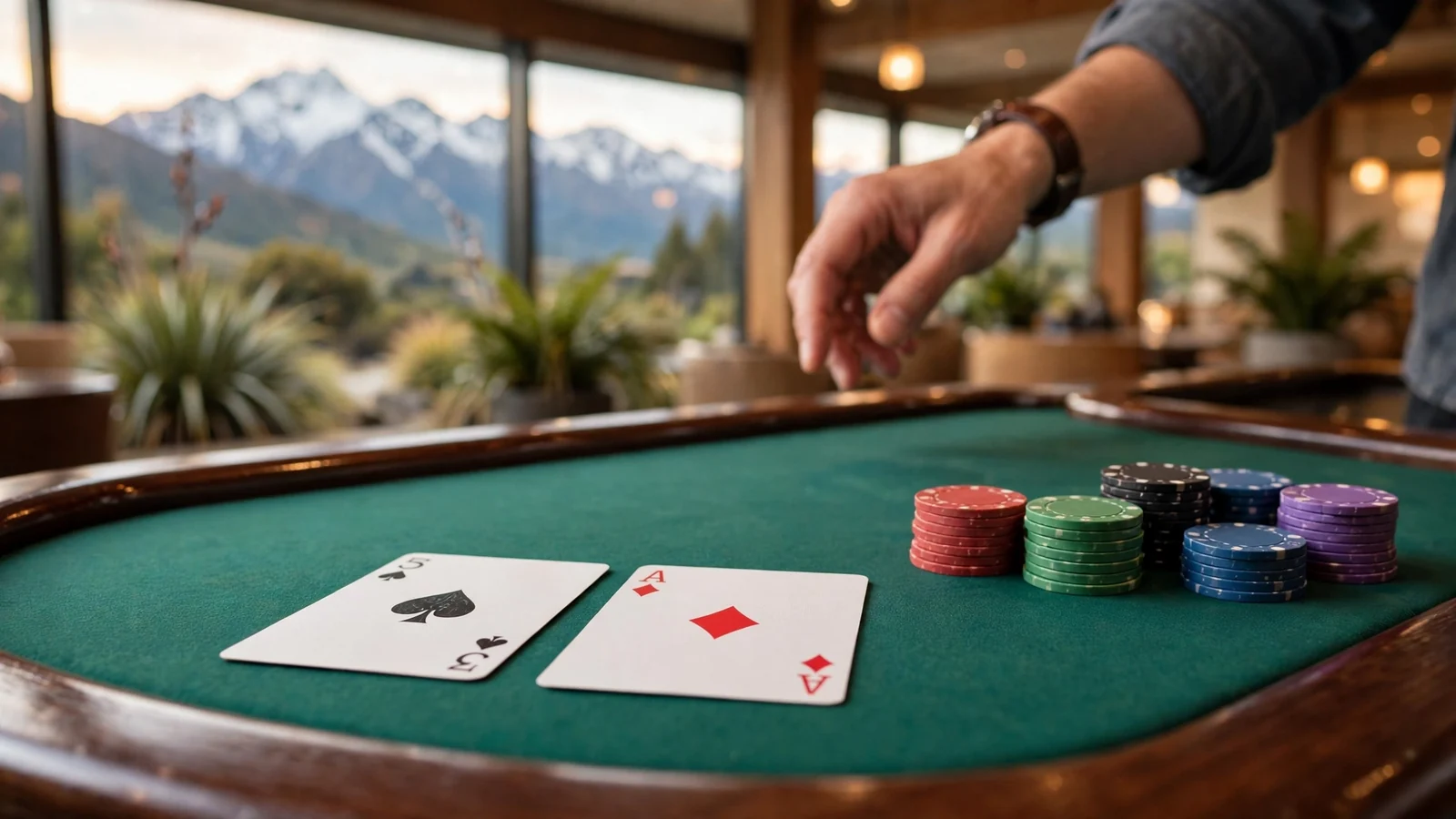
Read the table information before placing a bet, and make sure you understand any conditions that apply to your chosen game. Blackjack tables can differ in deck count, how the dealer plays a soft 17, whether surrender is allowed, and how a natural blackjack is paid. Those details matter alongside the betting range: two tables with similar limits may not offer the same terms.
A specialist review has described natural blackjack payouts of 3:2 at some tables and 6:5 at others. Treat that as an illustration of variation, not a promise about what a particular game offers. Check the payout displayed for the table you are considering rather than relying on a general description.
Keep table limits separate from maximum-bet rules attached to wagering requirements. A casino promotion may restrict the size of a bet while you are meeting those requirements, even if the table itself accepts a larger wager. Blackjack may also count differently towards wagering requirements than other games. Read the promotion’s fine print and conditions on trustworthy sites and casinos before playing with real money.
Set a budget before you start and do not increase it to chase losses. If the minimum bet does not fit your budget, choose another game or stop; the table’s posted range is a condition, not a reason to stretch your spending. Check the rules, payout and any promotional restrictions together, since each can affect whether the game fits your plans.
Does blackjack always pay 3:2?
No. A natural blackjack often pays 3:2, but some tables pay 6:5; check the payout rules before you play.
Is card counting illegal?
No. In New Zealand, card counting done through mental calculation is not illegal.
What is card counting?
Card counting is mentally keeping track of cards as they are dealt in blackjack.
Written by the editors at Casinosbonusesinfo.