
Roulette for Real Money in New Zealand: How It Works
 Available in US
The guide explains how stakes, balances and outcomes differ between practice play and roulette played for cash.

Table of Contents
- How Online Roulette Works With Real Stakes
- New Zealand’s Online Casino Rules in 2026
- Can You Make Money From Online Roulette?
- What the Odds Say About Winning Big
- Free Play or Real Money: What Changes?
- Even-Money Bets: Red or Black, Odd or Even
- Free Roulette and No-Wager Claims
- Using a Roulette App: Age and Identity Checks
- Does Roulette Double Your Money?
- Roulette, Money and the Cost of the Wheel
How Online Roulette Works With Real Stakes
Online roulette follows the same basic sequence as the table game: you choose where a ball might land, place a stake, and wait for the result of a spin. The difference between a free game and real-money play is not the wheel’s basic rules. It is whether the value attached to your stake is only part of a game interface or can affect your actual balance.
A free version lets you try the game without putting your own money at risk. Depending on the game, it may use a practice balance or let you spin without a cash stake. The result is for play rather than a cash return: a winning spin does not, by itself, turn into money you can withdraw. Free play can help you learn the layout and see how a round unfolds, but it does not reproduce the feeling of risking a real balance.
With real-money roulette, you select a stake from the funds available to you and place it on the table before the spin. The game then settles the round according to where the ball lands and the rules of that particular roulette version. A losing result reduces the balance by the stake placed on the losing selection; a winning result is credited according to the game’s payout rules. The exact amounts depend on the stake and selection, so it is important to understand the table before confirming a bet.
Choosing a real-money roulette site means checking the details available about each operator before you decide where to play. Use these short notes as a starting point for your own checks.
License: Malta Gaming Authority, licence no. MGA/B2C/394/2017 N1 Casino is listed with a Malta Gaming Authority licence, number MGA/B2C/394/2017.
Payout speed: 1-3 business days Lamabet lists a payout speed of 1–3 business days.
Payout speed: 1-3 business days Wintino lists a payout speed of 1–3 business days.
License: Malta Gaming Authority, licence no. MGA/B2C/370/2017 Play Grand is listed with a Malta Gaming Authority licence, number MGA/B2C/370/2017.
License: Tobique Gaming Commission, licence no. 0000091 7Bit Casino is listed with a Tobique Gaming Commission licence, number 0000091.
License: Tobique Gaming Commission, licence no. 0000064 Neospin is listed with a Tobique Gaming Commission licence, number 0000064.
License: Tobique Gaming Commission, licence no. 0000002 Ricky Casino is listed with a Tobique Gaming Commission licence, number 0000002.
License: 07017519840 · Payout speed: 1-3 business days Zotabet lists licence number 07017519840 and a payout speed of 1–3 business days.
License: Curaçao Gaming Authority, licence no. OGL/2024/165/0185 BitStarz is listed with a Curaçao Gaming Authority licence, number OGL/2024/165/0185.
The table interface is usually the main point of contact. It shows the wheel or a representation of it, a betting layout, and controls for placing or clearing selections. You may also see a balance and a record of recent results. These features help you follow the round, but a display of previous spins does not tell you what the next one will be. Each new spin is a separate result.
Online roulette can be presented as an automated game or as a live table. In an automated version, the wheel and ball are shown through computer-generated graphics, and the result is produced within the game. Live roulette uses a video feed of a physical table and a dealer conducting the spin. In either format, the basic decision remains the same: choose a selection, decide how much to stake, and wait for the result. The visual presentation changes; the possibility of losing a real stake does not.
If you want to play European roulette online for real money, check that the game is actually the European version rather than assuming all roulette tables use the same wheel. French and European roulette have a single-zero wheel, with numbered pockets from zero to 36. American roulette uses a different wheel layout. The game name and table information matter because the version affects the rules and the mathematical cost of play. French roulette may also apply rules called en prison and la partage to certain outcomes. Those terms describe what happens to a qualifying stake after a zero; they are not extra bets.

A real-money game may look much like its free counterpart, but the decisions deserve more attention. Before placing a stake, check the selected amount, the chosen position on the layout, and whether the game is accepting bets for that spin. Interfaces can make it easy to repeat a previous arrangement or add more than one selection. A quick review of the table before the spin is more useful than relying on a result history or a strategy label.
It also helps to distinguish the game’s presentation from its financial terms. Roulette rules explain how a result is determined and paid. The account or site terms explain how funds are handled outside the spin, including what applies to deposits and withdrawals. Those are separate questions. A clear animation or a live dealer does not, on its own, establish how a particular account is managed.
There is no special method that makes a real-money spin certain to pay. Roulette is a game of chance, and the stake is exposed to the outcome once a round is played. Treating the balance as money at risk—not as a practice score—is the essential difference between playing for free and playing for real stakes. If the purpose is to learn the layout, free play avoids that financial exposure. If you choose to stake money, understand the version and the bet before the spin begins.
Before Your Spin
- Check the selected stake amount
- Verify the chosen position on the layout
- Confirm the game is accepting bets for the spin
- Ensure you have identified the correct roulette version
New Zealand’s Online Casino Rules in 2026
The rules for online casino gambling in New Zealand changed when the Online Casino Gambling Act 2026 took effect on 1 May 2026. The law covers online casino table games, including roulette, and establishes a domestic licensing framework. That is different from the earlier position: under the Gambling Act 2003, online casinos could not be based in New Zealand, while offshore gambling sites were not licensed or supervised by a New Zealand regulator.
The new framework does not mean that every site accessible from New Zealand has a local licence. It is being introduced in stages. Online casinos that were already providing services to people in New Zealand before the Act began may continue during the transitional period, which runs until 1 December 2026. The transition has conditions, and providers that have not applied for a licence by that date must stop operating in the country. The full licensed system is not expected to be operational until 2027; the Department of Internal Affairs has identified that as its expected timeframe.
For Kiwi punters, the distinction matters. Before the new law, a customer using an offshore casino had no domestic government recourse if a dispute arose. The licensing framework is intended to bring online casino operations within New Zealand’s regulatory system, but its introduction is not an instant conversion of every offshore website into a locally licensed service. A site being reachable, or accepting New Zealand customers, is not by itself proof of local authorisation.

Who oversees and decides licensing matters?
The Department of Internal Affairs (DIA) is New Zealand’s primary gambling regulator and oversees the online casino licensing framework. It assesses applicants as part of the process. The Gambling Commission has a separate decision-making role: it hears and determines casino licensing applications, issues online casino licences, and approves changes to licence conditions.
In practical terms, the DIA’s oversight and assessment work should not be confused with the Commission’s authority to decide applications and issue licences. Both bodies have roles in the framework, but they do not perform the same function. The distinction is useful when reading claims about licensing: a reference to regulatory oversight is not necessarily a statement that a particular applicant has been granted permission to operate.
New Zealand will make no more than 15 online casino licences available. Each licence applies to a single brand, and an operator cannot receive more than three licences through the initial licensing process. Licences will first be granted for a period of up to three years, with renewal possible for a further period of up to five years. These rules define the structure of the licensing system; they do not establish that a particular roulette site has been approved.
The transition also has consequences for providers. Those already serving New Zealand before the Act came into force may continue until 1 December 2026 under the transitional provisions. Providers that have not applied by then must cease online casino gambling operations in New Zealand. If an application is declined, the provider must leave the market. These conditions concern operators, not a new criminal liability for Kiwi punters who used offshore sites before the domestic framework was introduced.
Primary gambling regulator that oversees the online casino licensing framework and assesses applicants.
Decision-making body that hears applications, issues licenses, and approves changes to license conditions.
Allows providers serving New Zealand before the Act to continue until 1 December 2026, provided they apply for a license.
What should you expect as a player?
A licensed site must verify your age and identity before allowing play. This is known as know-your-customer, or KYC, checking. The minimum age for online casino gambling is 18, so a player should expect to provide information or documents that establish both identity and eligibility. These checks are part of the regulated environment, not an optional feature of a roulette game.
Licensed operators must also provide harm-minimisation tools as standard. These include deposit limits, time-outs and self-exclusion, which allow a customer to set boundaries, pause access or block their own play. Their presence does not remove the need to consider whether gambling is suitable for you, but it gives customers formal tools that were not guaranteed through an offshore service outside New Zealand’s supervision.
When considering online roulette for real money in New Zealand in 2026, treat licensing status as a specific regulatory question rather than an assumption based on the site’s appearance or availability. The framework is being established under the 2026 Act, with the DIA overseeing it and the Gambling Commission deciding licensing applications. The transition remains relevant until the licensed system is fully in place; the regulatory position therefore depends on the provider’s status and the rules applying at the time.

Can You Make Money From Online Roulette?
A roulette session can end with you having more money than you started with. That possibility is why the game can look like an easy way to make money: a winning bet can pay out, and the result is decided quickly. But a possible win is not the same as a dependable way to earn. Roulette offers no reliable route to regular income, and a run of wins cannot be assumed to continue.
The distinction matters because gambling outcomes are uncertain while the cost built into the game is not. Each wheel layout gives the house an advantage over time, known as the house edge. It describes the game’s long-run mathematical balance; it does not tell you what will happen in a particular session. You could win, lose, or finish close to where you began. The edge is a reason not to treat repeated play as a plan for making money.
For European and French roulette, the house edge is 2.70%. Both use a wheel with 37 numbered pockets, from 0 to 36. American Roulette has a higher house edge of 5.26%. Those figures describe the games, not a guaranteed result for any one player. A session can end in profit even when the game has a built-in advantage for the house; that short-term possibility does not turn roulette into a reliable income source.
This is also why the phrase “play roulette online and make money” needs careful interpretation. It can mean that real-money play may produce a win. It cannot sensibly promise that you will earn money, or that a particular approach will make your results predictable. The distinction is easy to lose when a winning outcome is vivid and the underlying disadvantage is less visible.
A roulette game that pays real money is still gambling, not paid work. There is no dependable wage, and a previous result does not make the next one more favourable. If you stake money needed for bills or other commitments, a loss can create a practical problem beyond the game itself. The prospect of earning should not be used to justify risking funds you cannot afford to lose.
Financial Risk
Roulette is a game of chance with a built-in house edge; never stake money needed for bills or other essential commitments.
Claims about “free money” deserve the same caution. A no-deposit label does not establish that money is available to withdraw, or that it can be obtained without conditions. The wording alone cannot tell you what applies to a particular offer. Treating such a claim as an assured source of income would confuse promotional language with a certain payment.
A more grounded way to approach roulette is to decide beforehand what you are willing to spend for the entertainment of playing, then regard that amount as money that may be lost. That mindset does not improve the odds or guarantee a good experience. It simply keeps the purpose clear: any profit is an uncertain outcome, not a return you can budget around.
So, can you make money with online roulette? You can have a winning session, but you cannot depend on roulette to provide income. The house edge remains in place whether a session goes well or badly, and a favourable result is not evidence that the game has become a reliable way to earn.
What the Odds Say About Winning Big
A large roulette win is possible, but possibility is not the same as a favourable expectation. The wheel does not adjust its results to your target, and no betting pattern can make a future result more likely simply because earlier spins went another way.
The house edge is the casino’s mathematical advantage built into the game. In European and French roulette, the wheel has 37 pockets, numbered from 0 to 36, and the stated house edge is 2.70%. American Roulette has a higher edge of 5.26%. These figures describe the game’s underlying cost over continued play; they do not predict the result of a particular spin or tell you how much you will lose in a short session.

That distinction matters when you are thinking about a big payout. A wheel can produce an outcome that pays substantially more than the stake placed on it, but the chance of landing on a particular outcome is a separate matter from the payout attached to it. A bigger possible return does not make that result more likely. The house edge remains relevant because the available outcomes and payouts together leave the game with a mathematical advantage for the house.
A large stake can make the cash result of a win larger, but it also means more money is exposed to the same underlying odds. It does not change the wheel, remove the zero, or improve the chance of a favourable result. The same principle applies to increasing a stake after a loss: the next spin is not obliged to compensate you. Treating a run of results as a signal about what must happen next is a way to mistake randomness for a pattern.
Betting systems often present a sequence of stake changes as a route to a major win or a way to recover losses. A sequence can change how much you risk and how sharply your balance moves, but it cannot remove the house edge. If a plan depends on continuing to stake more after losing, it can also make a losing run more expensive. There is no system that turns the house’s mathematical advantage into a dependable player advantage.
House Edge Comparison
European and French roulette have a house edge of 2.70%, while American Roulette has a higher edge of 5.26%.
The difference between European or French roulette and American Roulette is therefore more than a detail on the table. The lower stated edge in the European and French games means less of the mathematical advantage is built in than in American Roulette. It still does not make a large win likely or assured. A lower house edge changes the long-run calculation; it does not promise a favourable session.
If you are considering a bet because you want a dramatic result, separate the size of the possible payout from the probability of receiving it. The wheel’s design sets the odds, while the amount you choose to stake sets how much is at risk. Neither a confident hunch nor a carefully arranged sequence of bets changes those underlying terms.
The sensible reading of the numbers is not that roulette can never produce a big win. It can. The point is that the outcome remains uncertain, while the house edge is part of the game’s structure. A striking win is a possible event, not evidence that a method has overcome the odds.
Free Play or Real Money: What Changes?
Online roulette can be played without staking cash or with real money. The wheel and the choices on the table may look much the same, but the experience changes when a result affects your own funds.
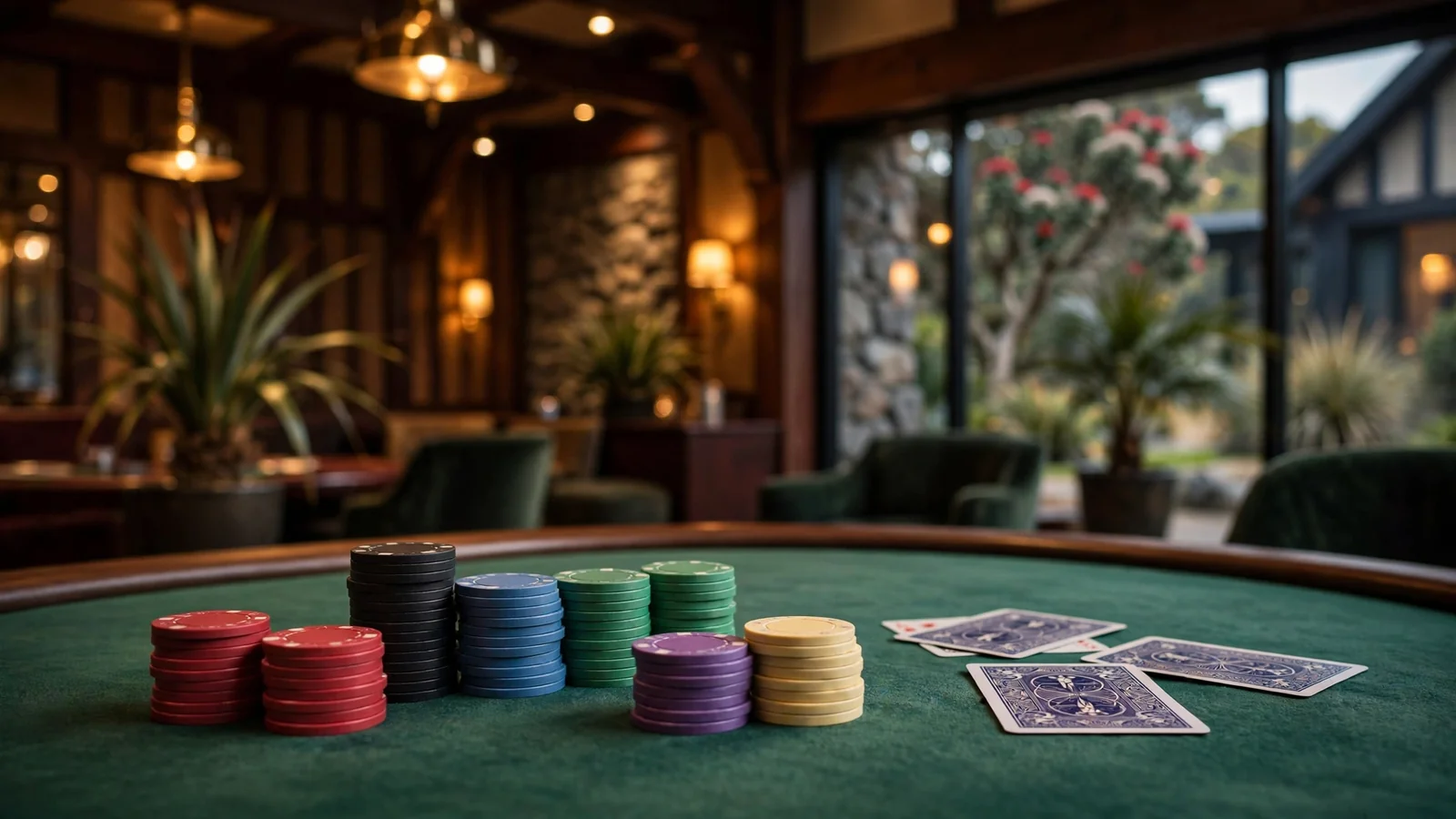
Free play gives you room to get used to the layout and the pace of a game without putting money at risk. You can see how a round unfolds, place a selection and watch the result without worrying about losing a stake. Any balance shown in this mode is for play, not a sum you can withdraw. That makes it useful for learning the interface, but it also means a win has no financial consequence.
The absence of financial pressure is the main difference, not a minor detail. When nothing is at stake, you may place bets more casually, try choices you would avoid with cash or continue playing without thinking about the cost. Those habits may not carry over once a real balance is involved. Free play can familiarise you with the routine; it cannot reproduce how you will feel when a result affects your money.
Playing for real money adds that consequence. A winning result can increase your balance, while a losing one reduces the funds you staked. Even a familiar decision can feel different when you know the outcome has a financial effect. It is worth deciding what you are comfortable spending before you begin, rather than treating a real-money session as simply another round of practice.
Neither format tells you what will happen in a later session. A run of results in free mode does not build a balance you can transfer into real play, and it does not make a future result more predictable. The value of practice is practical: learning where controls are, understanding what you have selected and becoming comfortable with the rhythm of a round. It is not evidence that you have found a way to control the outcome.
- Use free play to learn the layout
- Treat real-money stakes as entertainment spending
- Set a budget before beginning a session
- Assume free play results predict real-money outcomes
- Treat a real-money session as a practice round
- Expect a balance transfer from free mode to real play
If you are still learning, free play can help you become familiar with roulette before deciding whether to stake cash. If you choose real-money play, treat it as spending for entertainment, not as an extension of a successful practice session. Keep the distinction clear: play money carries no financial loss, while a real stake can be lost.
Even-Money Bets: Red or Black, Odd or Even
Outside bets sit on the edge of the roulette layout rather than selecting an individual pocket. They cover broad groups of outcomes: red or black, odd or even, high or low, and columns or dozens. Red/black and odd/even are commonly called even-money bets because a winning wager returns a profit equal to the amount staked.
With red or black, you choose one of the wheel’s two colours. The colour sections on the betting layout indicate which numbered pockets count for each choice. Odd or even works in the same broad way: you select whether the result should be an odd-numbered or an even-numbered pocket. These bets do not include every pocket on the wheel.
The zero is the important exception. It is neither red nor black, and it is neither odd nor even. If the ball lands there, a red/black or odd/even selection does not win. That means the apparent simplicity of covering a large group of numbers has a qualification built into the wheel itself.
The other outside bets cover different groups. High/low divides numbered outcomes into lower and higher ranges; columns and dozens refer to sections of the betting layout. They are still choices about groups, not individual numbers, but they are not the red/black or odd/even options usually meant by an even-money bet.

On a roulette table, the layout makes these distinctions visible: numbered pockets are arranged on the wheel, while the betting grid marks the groups you can select. In a live game, you may see a physical wheel and a dealer; in a digital game, the same categories appear as selectable areas. Either way, check what the selected area covers before placing a stake. A colour or parity choice can look self-explanatory, but the zero does not belong to either side.
The phrase “even-money” describes the payout relationship for a successful selection, not the chance that every spin will produce the chosen result. It also does not mean that red and black, or odd and even, must alternate. Each spin resolves on its own result, and the zero remains outside both sides of those bets. For a real-money roulette game, understanding that small exception is part of reading the bet correctly—not a strategy for predicting the next outcome.
Free Roulette and No-Wager Claims
Roulette can be played without staking money, as well as for real money. A free game lets you take part without placing a cash bet; it does not, by itself, mean that you can collect winnings. The distinction matters when a game or offer is described as “no wager”, because that phrase can refer to different things.
If you mean a free roulette game with no money involved, look for a mode that clearly lets you play without depositing or staking funds. Free play is a way to use the game without risking cash. It should not be treated as a route to withdrawable winnings unless the terms explicitly say that prizes can be paid out.

“No wager” may instead appear in wording about an offer. In that context, it does not necessarily mean that the roulette game itself is free, or that every condition has been removed. Read the terms attached to the specific claim: they should explain whether you need to deposit, place a bet, meet any other condition, or use a particular form of play. If the wording does not make those points clear, do not assume that “no wager” means no cost or no restrictions.
The same care applies to phrases that combine free play and real-money play. A site may make both kinds of roulette available, but that does not make them interchangeable. Free access does not establish that a cash game is available under the same conditions, and a real-money offer does not establish that free play leads to a payout.
Treat the description as a claim to verify, not as a promise. Check what the game allows you to do and whether any stated benefit can actually be withdrawn. If you cannot tell whether “free” refers to the game or to an offer, or what “no wager” removes, the wording has not given you enough information to make that distinction.
Using a Roulette App: Age and Identity Checks
An app does not change the basic entry requirement: to play roulette for real money on a licensed site in New Zealand, you must be at least 18 and prove both your age and your identity. The site carries out these checks through a process known as KYC, short for “know your customer”. It is a verification step, not a roulette rule.
That distinction matters when comparing a real-money roulette app with a game you can open without an account. Access to an app does not itself confirm that you are eligible to gamble. A licensed operator must establish who is using its service and verify that the person meets the minimum age requirement. You should expect to complete those checks before playing on the licensed site, even if you are using its app rather than a browser.
The practical point is to treat verification as part of setting up access, not as an optional extra. If you are under 18, you cannot meet the age requirement. If you are old enough, you still need to prove your identity; entering a date of birth or downloading an app is not a substitute for the operator’s checks.
When considering an app, look for clear information about its verification process and who is responsible for the service. The app interface may make access feel immediate, but that does not remove the operator’s obligation to check age and identity. Nor should a smooth sign-up screen be taken as proof that verification is complete.
For you, the sensible expectation is straightforward: a licensed site will ask you to establish both eligibility and identity before you play. Keep that requirement in mind when assessing app-based access, and do not treat an app’s availability on your device as evidence that you have been cleared to gamble.
Attention Downloading an app or entering a date of birth is not a substitute for the operator’s official KYC age and identity verification.
Does Roulette Double Your Money?
A roulette spin can leave you with twice the balance you brought to the table, but that is a possible result, not a dependable expectation. Whether a win doubles your balance depends on the amount staked, the type of bet and the result. A winning bet does not automatically double your whole balance: the payout is tied to the wager, while the rest of your funds remain at risk.
The distinction matters because a single successful spin says little about what repeated play will do. Roulette outcomes are uncertain, and the wheel gives the house a mathematical advantage over time. A short run of wins can make a balance rise; losses can undo that rise, and there is no point at which a previous result makes the next spin more likely to win.
The size of that built-in advantage depends on the roulette version. European and French roulette have a house edge of 2.70%, with 37 numbered pockets from zero to 36. American Roulette has a higher house edge of 5.26%. In practical terms, the house edge describes the game’s long-run cost, not a prediction of what will happen on a particular spin. You might win, lose or finish unchanged in a brief session.
That is why “double money” is best understood as an outcome someone may experience, not a feature of roulette. A bet can produce a gain large enough to match the starting balance, but no betting pattern can make that result reliable. Increasing stakes after a loss does not remove the wheel’s advantage; it can simply expose more of your balance to the same uncertain outcome.
If you are deciding whether to stake money, treat a possible doubling as a risk rather than a plan. Set the amount you are prepared to lose before play and do not count a hoped-for win as income. Roulette can produce a striking result in one session. It cannot promise that result, or provide a dependable route to a larger balance.

Roulette, Money and the Cost of the Wheel
When you compare roulette games for real-money play, the wheel matters as much as the layout of the betting table. Its pockets determine how often a winning number can appear relative to the payouts offered. That difference is reflected in the house edge: the mathematical advantage built into the game.
European Roulette and French Roulette use a wheel with numbered pockets running from zero to 36. The standard house edge for both is 2.70%. The zero is important: it gives the house an advantage even when a bet covers many numbers. A bet that looks close to an even chance is not necessarily a fair one, because the payout does not fully offset the wheel’s design.
American Roulette adds a double-zero pocket. That extra pocket changes the odds without changing the basic appeal of familiar bets, and the house edge rises to 5.26%. The gap between the versions is not a matter of presentation or table colour. It comes from the wheel itself, and it affects the mathematical cost of placing bets over time.
French Roulette has an additional feature. Its en prison and la partage rules can reduce the house edge further on eligible bets. These rules affect what happens when a bet loses on zero: depending on the rule, the stake may be held for another spin or partly returned. They do not remove the house advantage, but they make the French version less costly for those bets than the standard figure alone suggests.
The house edge is not a prediction of what will happen in a particular session. A real-money player can win or lose more than the mathematical average over a short stretch. It is a way to compare the underlying terms of different wheels, not a promise about an individual result.
So, before choosing a roulette table, check which wheel version is in use and whether French rules apply. A game labelled simply as roulette does not tell you enough. When money is at stake, the extra pocket in American Roulette has a measurable cost; the French rules can soften that cost, but only where they apply.
Published by the Casinosbonusesinfo team.