Live Dealer Casinos in New Zealand: What to Know
 Available in US
Live dealer games stream physical tables, while online controls let players follow and take part in the action.

Table of Contents
- What Makes a Live Dealer Casino Different
- How Live Blackjack and Baccarat Play
- What to Compare When Looking at Live Casinos
- Playing Live Dealer Games Online: Practical Limits
- New Zealand’s Online Casino Rules in 2026
- Accessing Real Live Dealer Tables from New Zealand
- Bonuses, Deposits and Withdrawal Timing
What Makes a Live Dealer Casino Different
A live dealer casino brings a table game to your screen through a video broadcast of real people dealing with physical equipment. Instead of having software generate each card or roulette result, the game uses real cards and wheels, with a professional dealer handling the action.
The broadcast may come from a purpose-built studio or from a casino in a particular country. In either setting, the camera feed links the physical table to the online game interface. You watch the dealer and the equipment as play unfolds, while the software provides the on-screen controls for taking part. The defining feature is that the game is being dealt in real time, rather than simulated entirely by a computer.
You can also interact with the professional dealer through the live format. That connection gives the game a shared-table quality: the dealer is handling the equipment, and the video lets you follow what is happening as it happens. It is still an online experience, though. You are not sitting at the physical table; you are joining its broadcast through a screen.
Choosing a live dealer casino in New Zealand means finding an option that fits your preferences and checking the details that matter to you. Use these concise verdicts as a starting point for your 2026 shortlist.
License: Malta Gaming Authority, licence no. MGA/B2C/394/2017 N1 Casino is listed with a Malta Gaming Authority licence, number MGA/B2C/394/2017.
Payout speed: 1-3 business days Lamabet lists a payout speed of 1–3 business days, a detail you can weigh when considering its live dealer offering.
Payout speed: 1-3 business days Wintino lists a payout speed of 1–3 business days, which may be useful to you when reviewing its live dealer option.
License: Malta Gaming Authority, licence no. MGA/B2C/370/2017 Play Grand is listed with a Malta Gaming Authority licence, number MGA/B2C/370/2017.
License: Tobique Gaming Commission, licence no. 0000091 7Bit Casino is listed with a Tobique Gaming Commission licence, number 0000091.
License: Tobique Gaming Commission, licence no. 0000064 Neospin is listed with a Tobique Gaming Commission licence, number 0000064.
License: Tobique Gaming Commission, licence no. 0000002 Ricky Casino is listed with a Tobique Gaming Commission licence, number 0000002.
License: 07017519840 · Payout speed: 1-3 business days Zotabet lists the identifier 07017519840; no further details are available here to assess its live dealer offering.
License: Curaçao Gaming Authority, licence no. OGL/2024/165/0185 BitStarz is listed with a Curaçao Gaming Authority licence, number OGL/2024/165/0185.
The word “live” refers to this real-time link between the dealer, the table and the player. It does not mean every casino streams from a public gambling floor. Some broadcasts are made in professional studios, while others come from casino locations. In both cases, the essential elements are real equipment, a real dealer and a live video feed.
This distinction helps explain why a live dealer game feels different from a digital table game, even when both appear on the same casino website. One shows a dealer working with physical cards or a wheel; the other is presented through software without that live table broadcast. The format is therefore about how the game is delivered, not a promise that every part of the online experience is identical to visiting a casino in person.
How Live Blackjack and Baccarat Play
Blackjack and baccarat both use cards, but the player’s role is different in each. In blackjack, you play against the dealer. Your aim is to finish with a hand closer to 21 than the dealer’s, without exceeding 21. Going over that total means losing, even if the dealer’s hand would otherwise be weaker.
Your decisions shape the hand. You can ask for another card to raise your total, or stand and keep the cards you have. Taking another card may bring you nearer to 21, but it also risks going over. Standing avoids that risk, though it leaves the dealer a chance to finish with a stronger hand. The aim is not simply to reach 21: a lower total can still win if the dealer’s hand is lower and neither hand has gone over.
Baccarat asks you to predict an outcome rather than manage a hand. You can bet on the player’s hand or the banker’s hand. The winning hand is whichever finishes closest to 9; the possible results are a player win, a banker win or a draw. A bet on either side can therefore lose if the other hand wins, while a draw is a distinct result rather than a win for either side.
That makes the central choice in baccarat simpler than the decisions in blackjack: you select which outcome to back before the hand is resolved. The objective is to forecast which hand will have the higher value, not to decide whether to take another card yourself. The names “player” and “banker” identify the two hands; they do not mean that you are playing blackjack-style decisions against a dealer.
Timing can matter at some baccarat tables. They may give you a set period to place your bet or make the required choice. If you are still considering the options when that window closes, you may not be able to act on that hand. Check the table’s instructions before play begins, since a time limit can make a straightforward decision feel more hurried.
Baccarat is a game of prediction where you bet on the player, banker, or a draw, whereas blackjack requires active decision-making to reach a total close to 21.
What to Compare When Looking at Live Casinos
A useful comparison starts with what you want from a table, not with a label such as “best”. Live dealer casinos can differ in the games they make available and in how quickly a session moves. The figures and details shown at a table can also help you judge whether its format suits you. These points are more useful than treating every live dealer casino as interchangeable.
Look at the game’s house edge
The house edge is a way of expressing the mathematical advantage built into a game. It is not a prediction of what you will lose in a particular session: short-term results can vary, and a player may finish ahead or behind. It does, however, provide a basis for comparing particular bets when the relevant figures are available.
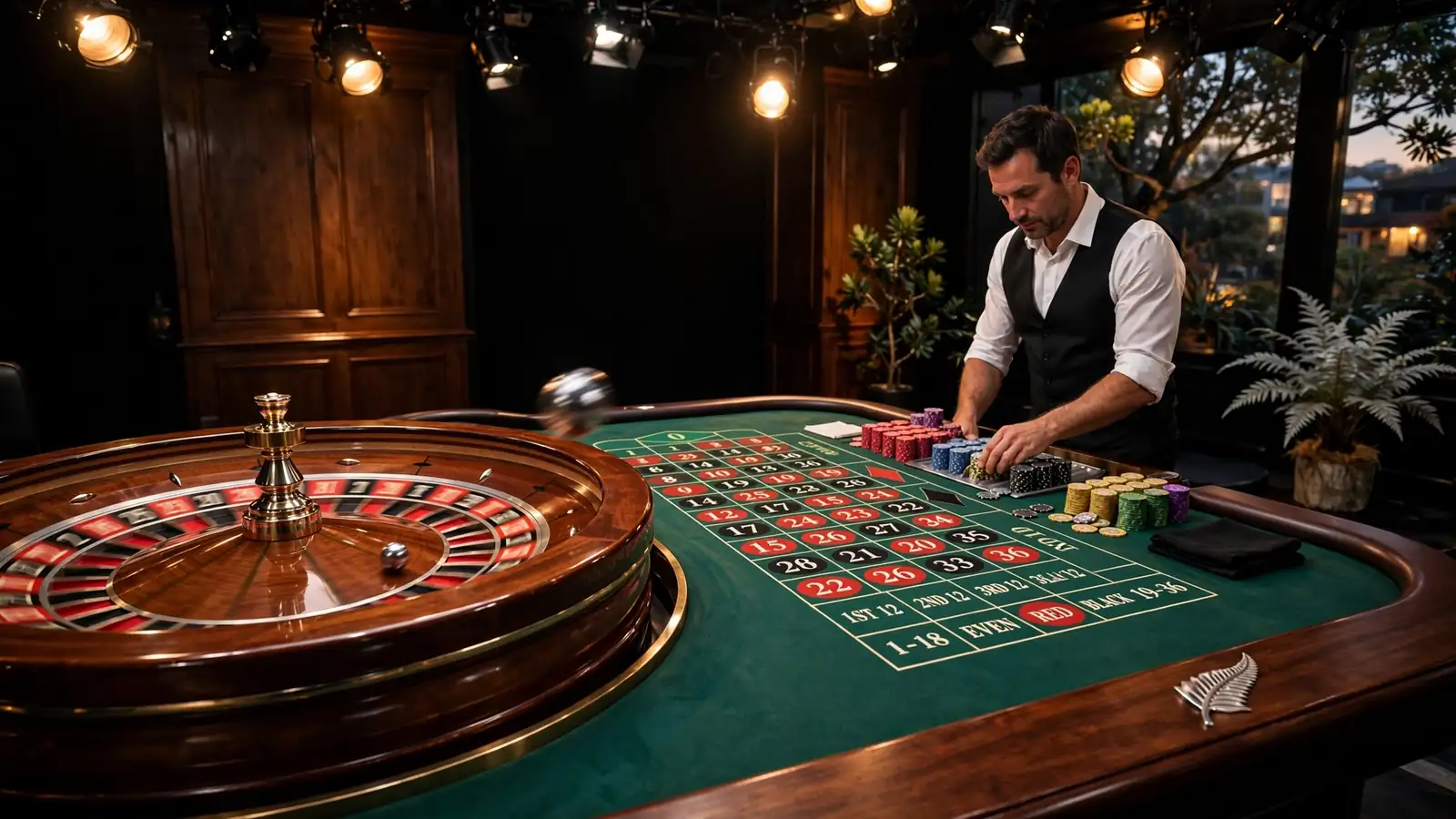
In live European roulette, the house edge is around 2.7%. In American roulette, it is around 5.26%. The difference matters if roulette is a regular choice for you: the American version has a higher edge, so its mathematical cost to the player is greater over time, all else being equal. Check which version a table offers rather than assuming that a roulette label tells you enough.
Baccarat offers another comparison. The house edge is around 1.06% on a banker bet and around 1.24% on a player bet. Those figures apply to the two different bet choices, so they should not be treated as a single edge for every baccarat wager. If you are comparing tables, make sure you know which bet the stated figure describes. A lower house edge does not guarantee a better result in an individual session, but it can help you make a more informed choice between options.

These figures are reference points, not a complete verdict on a casino live dealer table. The game, the specific bet and the rules attached to it all matter. A headline number without that context can be misleading; a clear explanation of the applicable edge is more useful.
Consider the pace you prefer
Live blackjack can take longer than blackjack played against a random number generator (RNG), the software that determines outcomes in a digital game. At a live table, you may wait while other players and the dealer take their turns. If you prefer a quicker sequence of decisions, that difference may affect how enjoyable a session feels.
Pace is not simply a matter of choosing the fastest table. A slower rhythm may suit someone who wants time between decisions, while another player may find waiting frustrating. Consider whether you want a shared table experience or a more direct, uninterrupted game. The same preference can matter when choosing between live games: the format of a session is part of the comparison, not just its name.
Do not assume that a live table will move at one uniform speed. The number of people playing and the flow of turns can influence how long you wait, while the game itself shapes the sequence of play. A comparison based only on a game title will not tell you whether its pace is a good fit.
The house edge is approximately 2.7%.
The house edge is approximately 5.26%.
The house edge is around 1.06%.
The house edge is around 1.24%.
Compare like with like
When you weigh up live dealer casinos, compare the same game and the same type of wager wherever possible. The roulette edge differs between European and American versions; in baccarat, the stated edge depends on whether the bet is on banker or player. Comparing unrelated figures can make one table seem more favourable without showing whether the difference is real or simply reflects a different game or bet.
It also helps to separate a game’s mathematical features from your own preferences. A lower house edge may be relevant to a player who values that measure, but it does not make every other consideration unimportant. Pace, the decisions you are comfortable making and the amount of attention a game demands can all shape whether a table suits you. No single comparison point can answer that for everyone.
Before settling on a table, read the information attached to it rather than relying on a broad description of the game. Look for the version being offered and, where house-edge figures are shown, check the bet to which they refer. If you cannot tell what a figure means, it is not a sound basis for comparison.
A careful comparison is particularly useful when several tables share the same game name. A label alone does not tell you the house edge of every wager or how the pace will feel. Use the details that are available to distinguish the options, and keep the limits of each measure in mind: house edge describes a mathematical advantage, while pace describes the rhythm of play. Neither predicts the outcome of your next hand or spin.
For a Kiwi player comparing a live dealer casino, the practical question is therefore not which table sounds most impressive, but which one fits the way you want to play and gives you enough information to make that choice. The house-edge figures for roulette and baccarat provide concrete points of comparison; the slower turn-taking of live blackjack is another. Treat those as separate considerations rather than combining them into a simple ranking.
Playing Live Dealer Games Online: Practical Limits
A live dealer table combines a streamed video with software that lets you take part remotely. That format can feel more immediate than a game that runs entirely on your device, but it also depends on a working connection between the stream, the game interface and the casino’s systems. If one part falters, the experience can become less smooth than the polished presentation suggests.
That is the central trade-off of playing live online: you are watching a real table, but your view and actions reach you through a digital service. The table does not pause simply because your screen freezes or the connection drops. Before joining, it is worth considering not only whether a game appeals to you, but whether your device and connection are suitable for a continuous stream.
The stream is part of the experience
Unlike a game that can run locally on a phone or computer, a live table relies on video arriving over the internet. Picture quality can change if the connection is unstable, and a temporary interruption may leave you unable to follow what is happening. The controls may remain visible while the video stalls, or the page may need to reconnect. The exact response depends on the casino’s software, so do not assume every interruption will be handled in the same way.
Attention Live dealer games rely on a continuous video stream; an unstable internet connection may cause the video to stall or the page to reconnect.
A small screen can make it harder to follow several parts of the interface at once. You may be trying to watch the dealer, read the information displayed around the table and use the controls without obstructing the view. On a phone, rotating the device or switching between apps can also affect how comfortable the session feels. A larger screen may make the layout easier to see, but that does not remove the need for a reliable connection.
Sound is another practical consideration. You might prefer to keep the audio on, lower it or mute it, depending on where you are playing. If you cannot use sound, check that the visual information on screen is enough for you to follow the session. A busy setting, poor speakers or an audio delay can make a broadcast feel less clear, even when the picture is working.
Technical problems are possible. A specialist review has reported that live dealer games can encounter them from time to time, but that does not establish how often they affect any particular service. A problem might be on the player’s side, such as a disrupted connection, or within the service itself. From your screen, it may not be obvious which is responsible. Treat an unexplained interruption as a reason to pause rather than to keep acting without being sure what the game is showing.

If a table stops responding, avoid repeatedly pressing controls or opening multiple versions of the same game. First check whether the video and interface have resumed, and look for any status message from the casino. If the issue persists, its support channel can clarify whether the session is still active and what steps are available. Keep any relevant details of the interruption, such as the game and what appeared on screen, so you can describe the issue clearly.
Free play may not be available
You may expect to try a live table in a free-play mode before using real money. That option is often absent: operating a live dealer table involves significant costs for casinos, so live games are typically not offered for free play. This is a practical limitation of the format, not a sign that every casino handles access in the same way.
That absence changes how you can assess a table before committing to it. You may be able to view its rules or interface without joining, but that is not the same as testing the full experience at no cost. Do not assume that a “demo” option shown elsewhere on a casino site also applies to its live tables. Check the game itself and the relevant information before entering, rather than relying on a general claim about free games.
Without a free version, it can be harder to judge whether the layout suits your device or whether the pace feels comfortable to you. Take time to inspect the available instructions and settings first. If you are not sure how a control works, do not rely on finding out during a live session. The lack of a practice mode makes basic preparation more useful, not less.
Live dealer tables typically do not offer free-play or demo modes due to the high operational costs of streaming real dealers.
Give the session your attention
Live play is not always easy to fit around interruptions. A stream may continue while you look away, and the interface may require you to respond within the game’s available time. Some tables use time limits for player actions; the details vary by game. If you are distracted by messages, other apps or people nearby, you may find it harder to keep track of the display and make considered decisions.
It can help to close unrelated apps and notifications before starting, particularly on a device that is also handling the video. This is a practical way to reduce distractions, not a guarantee that the stream will remain uninterrupted. Choose a setting where you can pay attention, and stop if you cannot follow what is happening. Continuing while uncertain about the display can turn a minor technical or personal distraction into a poor decision.
Also consider whether you want to play with video and audio enabled. A live broadcast may use more of your attention than a simple interface, and watching it in a public or shared space may not suit you. You can decide whether to use headphones or mute the sound, but make sure you can still understand the information the game presents. Convenience depends on the situation, not just on the device.
What to check before joining
Before opening a table, check that your device is charged or connected to power, that the connection is stable enough for video, and that the game’s controls are legible on your screen. These checks cannot prevent service-side faults, but they can help distinguish an issue with your setup from an interruption elsewhere. If you are using mobile data, consider whether streaming is appropriate for your plan and location.
Read the table information before entering, including any instructions about timing or what to do if the connection is interrupted. If the casino provides a help channel, note where to find it while the page is working. You should also know how to leave the table cleanly rather than simply closing the browser if you need to stop.
Live dealer play offers a more human-facing format than a game that runs without a broadcast, but that format brings dependencies: video, audio, software and your connection all need to work together. Free-play access may not be available, and technical faults cannot be ruled out. Understanding those limits helps you decide whether an online table fits the way you want to play, without mistaking a live stream for a fault-proof one.
New Zealand’s Online Casino Rules in 2026
New Zealand’s rules for online casino gambling are changing, but the transition matters as much as the new law. The Online Casino Gambling Act 2026 took effect on 1 May 2026, establishing the country’s first domestic licensing regime for online casino gaming. That does not mean every site available to Kiwi players is already licensed under the new system, or that the full regime is operating.
Regulatory Deadline
From 1 December 2026, only the 15 approved operators will be legally permitted to accept New Zealand players.
Before the Act, online casinos could not be based in New Zealand, and offshore online casino services were not licensed or supervised by a New Zealand regulator. The Gambling Act 2003 prohibited domestic online casinos, but it did not prevent players from accessing offshore sites. During that period, a customer who had a dispute with an offshore operator had no domestic government recourse.
The 2026 law creates a framework for approving operators, with a maximum of 15 licences for the online casino sector. It also sets a transition between the law taking effect and the point when the new restrictions apply. Online casinos that were already serving people in New Zealand before 1 May may continue operating during this window, subject to the Act’s transitional provisions.
That distinction is important if you are assessing a live dealer casino in New Zealand. Availability during the transition is not proof that an operator has secured a licence, and the new framework is not yet the same thing as a fully functioning licensing market. The full licensed regime is not expected to be operational until 2027.
Live tables fall under the online casino licence
The new rules do not create a separate licence category for live dealer tables. They sit in the same category as online slots and digital table games. In practical terms, the licence framework covers online casino services as a whole, rather than treating a streamed table game as a different type of gambling service.
This matters because a site’s offering may include several formats. The relevant question is not simply whether it has a live table, but whether the operator is authorised to provide online casino gambling to people in New Zealand under the rules that apply at the time. A page describing a game or displaying a table does not, by itself, establish the operator’s regulatory status.

The Act permits up to 15 operators to be licensed. From 1 December 2026, only those 15 approved operators will be legally permitted to accept New Zealand players under the new regulations. Operators that have not applied must stop serving Kiwi players by that date. Sites with an application pending may continue during the transition without advertising, while the Department of Internal Affairs considers the application. If an application is declined, the operator must cease its New Zealand online casino operations and leave the market.
The start date and the transition deadline therefore mark different stages. The Act became effective in May, while the restriction to approved operators begins in December. Treating the May date as though all offshore sites immediately needed a new licence would miss the transitional provisions. Treating the transition as permanent would be equally misleading.
Check status with the regulator
New Zealand does not issue a separate Kiwi-specific licence. The new domestic regime provides for licences covering online casino gambling, including live tables, but the transition means an operator’s position can depend on whether it was already serving the market and whether it has applied. A site’s own statement is not a substitute for checking its status.
For the most reliable current information, confirm the operator’s licence status with the Department of Internal Affairs (DIA). Check for the operator itself rather than assuming that a game provider, a payment option or a familiar brand name proves the site is authorised. Regulatory status can change as applications are decided and the transition progresses.
- Confirm licence status with the Department of Internal Affairs (DIA)
- Verify the operator’s legal name and licence reference
- Rely on a site’s own statements or badges in the footer
- Assume a game provider’s name proves the site is authorised
Advertising rules also form part of the new framework. During the transition, operators are prohibited from advertising online casino gambling services to people in New Zealand; sites with pending applications may continue operating without advertising while awaiting a decision. This is another reason not to treat promotional material—or its absence—as a dependable indicator of whether an operator has approval.
The change is a shift from a market in which offshore services were not supervised by a New Zealand regulator to one with a domestic licensing route and a defined cutoff for unapproved operators. For anyone considering live dealer casinos in New Zealand, the date and the operator’s status matter: access during the transition does not guarantee that the same site may keep accepting players once the December rules take effect.
Accessing Real Live Dealer Tables from New Zealand
Kiwi players can access live dealer games through international and offshore gambling sites. That access does not, by itself, show that a particular operator is properly supervised. Before creating an account or depositing money, check who regulates the site and whether the licence can be verified with that regulator.
Start with the operator’s own information, but do not treat a badge or a line of text in a footer as proof. Look for the regulator’s full name, the licence holder’s legal name and a licence reference. These details should identify the company responsible for the gambling service, rather than merely the software provider or a payment company. If the site gives only a vague claim that it is “licensed”, you have not yet established who is accountable.

Next, check the details against information published by the named gambling body. A regulator’s register, if it provides one, can help confirm whether the licence exists and whether the listed business matches the operator named on the casino site. Compare the spelling of the company name and any licence reference carefully. A valid licence belonging to a different company is not evidence that the site you are considering is covered.
The website address matters too. Confirm that the operator’s terms and licence information relate to the domain you are using, not to a similarly named site. If the regulator provides a way to check authorised websites, use it. Where the regulator’s public information is unclear, contact the regulator or the operator for clarification before proceeding. Do not rely solely on logos, search snippets or copied claims: those are easy to display and do not establish regulatory status.
Read the terms that identify the company providing the gambling service. The brand shown on the home page may not be the legal name of the licence holder. The terms should make the connection understandable. If the operator’s identity changes between the footer, account terms and licence details, pause until you can resolve the inconsistency. You should be able to tell which business is taking your bets and which regulator, if any, oversees that business.
Verify Operator Licence
- Find the regulator’s full name and licence reference
- Cross-check details with the regulator’s official register
- Confirm the website domain matches the licence information
- Verify the legal name of the licence holder in the terms
A recognised gambling body is one with an identifiable role in regulating gambling, rather than a trade group, software supplier or payment service. The key point is not simply that a regulator’s name appears somewhere on the site; it is that the regulator’s own information supports the operator’s claim. If you cannot verify the claim independently, treat the status as unconfirmed rather than assuming the site is regulated.
Regulation also has limits. A foreign regulator’s oversight is not the same as approval from a New Zealand regulator, and it does not guarantee that every dispute will be resolved in your favour. Check what complaint route the operator describes, how to contact it, and whether the regulator explains how complaints are handled. These steps will not remove every risk, but they help you understand which organisation is responsible if something goes wrong.
The same checks apply whether you arrive at a site through a direct link, an app or another route. Make sure the operator’s name and domain remain consistent when you move from its information pages to the account area. If a link takes you to a different company or address, do not assume the original licence claim automatically covers it. Recheck the details before sharing personal or payment information.
A site can be accessible from New Zealand without being subject to local supervision. For that reason, separate two questions: whether you can reach and use the service, and whether the operator is regulated by a body you can identify and verify. For Kiwi players, offshore access is available, but checking the operator remains an important part of deciding whether to use it.
If an operator gives conflicting answers about its licence, cannot identify the business behind the brand, or directs you only to its own claims, there is little reason to rush. Leave the account unopened until the details make sense. A clear licence trail is a basic check, not a guarantee of safe play, but an unclear one gives you less reason to trust the service.

Bonuses, Deposits and Withdrawal Timing
Payment options affect more than how you fund an account: they can determine the currency you use, the checks required and how long a withdrawal takes. Many operators support deposits and NZD payouts, but availability depends on the site and the payment method. Check the cashier’s terms before depositing, including whether the account balance and withdrawal will be handled in the same currency.
Payment methods named in specialist reviews include POLi, e-wallets such as Neteller and Skrill, and Bitcoin. Those reviews describe Neteller, Skrill and Bitcoin as options for fast deposits or withdrawals, but also note that fees or restrictions may apply. A method being listed on a site does not mean every transaction will be immediate or free; read the operator’s conditions and check any limits shown at checkout.
Withdrawal-time figures also need context. One specialist review reports crypto payouts clearing in under an hour, compared with 24 to 48 hours for POLi and e-wallets, and five to seven business days for bank transfers. Treat these as timings reported by that review, not a promise or a settled standard across operators. Processing can depend on the operator’s own checks and the payment service, so look for the current withdrawal terms before you commit funds.
A live dealer casino bonus may be subject to conditions, including which games count toward any requirements. In New Zealand, bonus offers are capped at NZ$100 or 200% of the deposit, as applicable. Read the offer’s terms to see which cap applies and whether the bonus can be withdrawn, or whether it is credit with restrictions. Do not assume that a headline offer applies to live dealer games or that every payment method qualifies.
Before depositing, confirm the available currency, any payment fees and the stated withdrawal process. A clear cashier and readable terms are more useful than a prominently displayed bonus whose conditions are difficult to find.
Can New Zealand players play real-money live dealer games at offshore casino sites?
Yes. New Zealand players are not prohibited from using offshore gambling sites, but you should check that the operator is regulated by a recognised gambling body and confirm its licence status with the Department of Internal Affairs.
Do live dealer games have a house edge?
Yes. It varies by game and bet: live European roulette is around 2.7%, American roulette around 5.26%, and baccarat around 1.06% on banker bets or 1.24% on player bets.
How do live casinos work?
A real dealer runs a physical game using cards or a wheel, and a live video feed brings the action to your screen. You use the game interface to place bets and, where relevant, make decisions while play unfolds.
What changes on 1 December 2026?
From 1 December 2026, only 15 approved operators will be legally permitted to accept players from New Zealand under the new gambling regulations.
How many operators can hold a licence?
The Online Casino Gambling Act 2026 allows up to 15 licences for the online casino sector, including live dealer tables.
Written by the editors at Casinosbonusesinfo.