Automated Roulette in New Zealand: How It Works
 Available in US
Learn how software, live dealers and auto-betting affect a round—and why none of them predicts its result.
Table of Contents
- What “Auto Roulette VIP” Means in Practice
- Software Roulette and Live Dealers: Two Different Systems
- How a Roulette Round Reaches Its Result
- What Changes When You Play Roulette Live
- Electronic Roulette, Betting Software and the Limits of Prediction
- Using Auto Play Without Mistaking It for a Winning Trick
- Free Spins and Roulette Simulators: What the Facts Establish
- Live Auto Roulette, VIP Tables and La Partage
- Auto-Betting: The Bet Still Determines the Payout
- Does Live Auto Roulette Spin Every 30 Seconds?
What “Auto Roulette VIP” Means in Practice
“Auto roulette” can describe a roulette game presented through an automated interface, while “VIP” is a label that may suggest a particular table or level of service. Neither phrase, by itself, tells you who operates the service or what legal oversight applies. An automated roulette machine may also mean a physical terminal rather than an online game, so the setting matters. Before considering an online casino, it is worth separating the game description from the more consequential question: what rules govern the provider in New Zealand?
The legal position is changing. New Zealand’s Online Casino Gambling Act 2026 took effect on 1 May 2026 and created the country’s first domestic licensing system for online casino gambling. The framework is overseen by the Department of Internal Affairs, which is also the primary regulator of gambling in New Zealand. The Gambling Commission has a distinct role: it considers casino licence applications, makes decisions on them, issues online casino licences and approves changes to licence conditions. These responsibilities are related, but they are not interchangeable.
If you’re exploring automated roulette options in New Zealand for 2026, this list gives you a concise reference point. Check the details that matter to you before choosing where to play.
License: Malta Gaming Authority, licence no. MGA/B2C/394/2017 N1 Casino is listed with a Malta Gaming Authority licence, no. MGA/B2C/394/2017.
Payout speed: 1-3 business days Lamabet lists a payout speed of 1–3 business days.
Payout speed: 1-3 business days Wintino lists a payout speed of 1–3 business days.
License: Malta Gaming Authority, licence no. MGA/B2C/370/2017 Play Grand is listed with a Malta Gaming Authority licence, no. MGA/B2C/370/2017.
License: Tobique Gaming Commission, licence no. 0000091 7Bit Casino is listed with a Tobique Gaming Commission licence, no. 0000091.
License: Tobique Gaming Commission, licence no. 0000064 Neospin is listed with a Tobique Gaming Commission licence, no. 0000064.
License: Tobique Gaming Commission, licence no. 0000002 Ricky Casino is listed with a Tobique Gaming Commission licence, no. 0000002.
License: 07017519840 · Payout speed: 1-3 business days Zotabet is listed with the identifier 07017519840.
License: Curaçao Gaming Authority, licence no. OGL/2024/165/0185 BitStarz is listed with a Curaçao Gaming Authority licence, no. OGL/2024/165/0185.
That new framework does not mean that every online casino serving New Zealand residents is already operating under a New Zealand licence. The law includes a transition period from 1 May 2026 to 1 December 2026. Online casinos that were already providing services to people in New Zealand before the start of that period may continue to do so until 1 December 2026, subject to the Act’s transitional provisions. The complete licensed regime is not expected to be fully operational until 2027. In other words, the word “licensed” needs a local context: a provider’s permission or approval elsewhere is not the same thing as a New Zealand online casino licence.
Before the 2026 law, online casino gambling supplied from outside New Zealand was not licensed or supervised by a New Zealand regulator. A customer who wagered through an offshore website in that period had no domestic government recourse if a dispute arose. Offshore sites may still be accessible to people in New Zealand, and the legal framework described here does not place criminal or fine liability on a player simply for using one. That does not make an offshore provider locally supervised, nor does it give a customer the protections associated with domestic oversight. Access and regulatory accountability are separate issues.
The distinction matters when a site uses polished language such as “VIP” or presents automated roulette as a simple, ready-to-play option. Those labels do not establish that the provider holds a New Zealand licence, that a licence application has been approved, or that a customer has a domestic route for resolving a complaint. A VIP heading is not a regulatory category. It is safer to treat promotional wording as a description chosen by the provider, not as evidence of legal status.

The transition also has a defined endpoint. Providers that have not applied for a licence must stop conducting online casino gambling in New Zealand by 1 December 2026. If an application is declined, the provider must cease its online casino gambling operations in the country and leave the market. Unlicensed operation is expected to become an offence from around mid-2027. These dates describe obligations for providers and the development of the licensing system; they are not a promise that every service visible to a New Zealand user has already been assessed or approved.
For readers looking at automated roulette in New Zealand in 2026, the practical point is to avoid treating availability as proof of local authorisation. A search result, an account page or an “auto spin” control can show that a service is presented to you; none of those things, on their own, establishes its regulatory position. The relevant oversight bodies are the Department of Internal Affairs and the Gambling Commission, with the Commission responsible for licensing decisions and the Department overseeing the framework. If you are comparing an auto roulette casino or a VIP-branded table, the game label should come after the question of who is legally responsible for offering it.
There is an inconvenient gap between a new law taking effect and a complete licensing regime becoming operational. The transition allows some existing providers to continue temporarily, while the system for full licensing is still being established. That makes the timing material, not a footnote. An automated interface may make the act of playing look uncomplicated; the legal position behind the service is not simplified by the interface.
Regulatory Status
Unlicensed operation of online casinos is expected to become an offence from around mid-2027 in New Zealand.
Software Roulette and Live Dealers: Two Different Systems
“Automated roulette” can describe more than one way of producing a result. In software-based roulette, a random number generator, or RNG, determines the outcome. A live dealer product does not use an RNG system. That is the central distinction: one result is generated by software; the other belongs to a live dealer format.
An RNG is software used to produce random outcomes. In roulette, it supplies the result for the software-based game. The screen may present a familiar roulette table, but the appearance does not tell you how the outcome was generated. The important point is that the game’s result comes from the RNG, not from a live dealer.
Live dealer roulette is different in that the product does not use an RNG. The word “live” identifies a different format, not a software setting that changes the RNG’s behaviour. It is therefore worth distinguishing the two systems before treating them as interchangeable versions of the same game.
What “automated” does—and does not—tell you
The word “automated” can make a game sound as though it describes its outcome system. It does not, by itself, tell you whether a roulette product is software-based or live dealer. To understand that distinction, look at the product format: software-based roulette uses an RNG, while a live dealer product does not.
That distinction also helps make sense of searches for real auto roulette. “Real” may mean a live dealer experience to one person and a roulette game played for real stakes to another. Neither meaning, on its own, confirms how the result is generated. The relevant question is whether the product is software-based or live dealer.

A roulette interface can look convincing without revealing the process behind its result. Likewise, the presence of a dealer in the presentation does not make software-based roulette a live dealer product. The format, rather than the visual style or the word “auto”, is the useful clue.
Where strategy fits
People looking for an auto roulette strategy, or a strategy for an automated roulette machine, may be asking how to influence results. The difference between the two systems does not provide a method for doing that. In software-based roulette, the result is produced by an RNG; in live dealer roulette, an RNG is not used. Those are descriptions of how the products generate outcomes, not ways to forecast them.
A strategy for choosing or arranging bets is a separate matter from the system that produces a result. Automating an action would not change whether the underlying game uses an RNG. Nor does the live dealer format, simply by not using an RNG, establish that its results can be predicted. The distinction identifies the mechanism; it does not create a dependable advantage.
This is also why “automated roulette software” should not be treated as a single technical category that applies to every product described as automated. Software-based roulette has an RNG. Live dealer roulette does not use one. The label alone is too broad to settle which format you are looking at.
Uses a random number generator (RNG) to determine the outcome of each round.
Does not use an RNG; the result is produced by a live dealer using a physical wheel.
When comparing the two, keep the question narrow: is the product software-based, or is it a live dealer product? The first uses an RNG to generate results; the second does not. That difference matters when you are trying to understand what kind of game is on screen, but it is not a prediction tool, a betting method or a promise about what will happen next.
How a Roulette Round Reaches Its Result
A round of automated roulette is built around three steps: you choose chips, place bets on the table, and wait for the ball to settle in a numbered pocket. The result is that pocket’s number. Whether a bet wins depends on how the selection you made relates to that result; any winning bet is then paid according to its type.
Before the ball falls, you decide what to cover. A bet can name a specific number, select red or black, choose odd or even, or cover a combination of numbers. These options differ in what must happen for the bet to win. A selection tied to one number depends on that particular number appearing, while a colour or parity selection depends on the pocket matching the chosen category. A combination covers several numbers rather than just one.
The table layout helps show what each choice means. Number selections are placed on the relevant number, while broader selections correspond to groups or categories on the table. The key is to understand what your chips indicate before the result is known. A chip placed on a number is not the same kind of selection as one placed on red or odd: each is judged against the result in its own way.

The pocket decides the result
Once the ball comes to rest, the numbered pocket it occupies determines the winning number. The table result is not a separate decision from the ball’s landing place: it is read from that pocket. Your bet is then compared with the outcome. If the result matches the number, colour, odd-or-even category, or combination you selected, the bet qualifies as a winner under that selection.
This makes the order important. You first choose what the bet covers; the ball’s landing place then supplies the result against which that choice is assessed. Choosing a category does not change the pocket, and selecting a number does not make that number more likely to appear. The bet describes what you are backing, not what the round must produce.
How winning bets are settled
Winning bets are paid automatically, with the payment determined by the type of bet placed. In practical terms, settlement follows the selection: a bet on a specific number is treated according to that number bet, while a colour, parity, or combination bet is handled according to its own category. The bet type therefore matters both when you make the selection and when a winning result is paid.
You can read a round by tracing those elements in order: identify the chips and the part of the table they cover, note the numbered pocket where the ball falls, then see whether that outcome fits the selection. This is the basic mechanics of roulette, whether the table is described as automated or otherwise. The important distinction within a round is not the label on the game but the relationship between the pocket and the bet you chose.
Roulette Round Process
You choose your chips and place them on the table, covering specific numbers, colours, or combinations.
The ball is spun and comes to rest in a numbered pocket, which supplies the winning result.
Your selection is compared to the pocket result, and winning bets are paid automatically based on the bet type.
For a player, that sequence is also a useful check against confusing a chosen bet with its outcome. The table records the selection; the pocket supplies the result; settlement follows the bet type if it wins. Each step has a separate role, and none of them changes what the others mean.
What Changes When You Play Roulette Live
Live roulette changes the format in which the game is presented. Instead of a software-based roulette product, you are joining a live dealer product: the dealer is part of the game experience. That difference matters because live dealer products do not use a random number generator, or RNG, system. It does not, by itself, tell you what the result will be or give you a way to influence it.
The word “live” can suggest more than it establishes. It identifies a dealer-led product, but it should not be treated as a promise about every detail of the table, its presentation or how quickly a round proceeds. Those specifics depend on the particular product. The label alone does not confirm a table’s rules, any special features or whether it suits the way you prefer to play.
A live dealer format also does not mean that the game has become a different kind of roulette. The familiar idea remains: you are taking part in roulette, but through a product built around a live dealer rather than one using an RNG system. The distinction is about the format and the system used, not a guarantee of a particular result. A live presentation may feel different from software, but it does not make the outcome predictable.

This helps clarify phrases such as “live auto roulette”. They combine two ideas that are easy to confuse. “Live” points to the dealer product; “auto” may suggest that some part of play is automated. The phrase does not establish that the dealer, the game outcome or every player action is automated. Nor does it prove that a particular table includes automatic betting controls. Check the product description for what it actually offers rather than inferring features from its name.
The absence of an RNG system is a factual distinction, not a shortcut for judging a table as safer, fairer or more favourable. Those conclusions do not follow from the format alone. Likewise, seeing a dealer involved does not provide a basis for predicting the next result. A live product remains roulette, not a system for reading or controlling outcomes.
If you are comparing live and software roulette, keep the question narrow: are you choosing a dealer-led product or a software-based one? The answer helps identify the format, but it does not settle other questions about the product. Details such as table rules and available options need to be checked individually; they should not be assumed from the word “live”.
In practice, “live casino roulette” describes a dealer-led way to take part in roulette. The meaningful point is that this type of product does not use an RNG system. Beyond that, the label is not a substitute for the table’s own description, and it is no reason to expect a particular outcome.
Live Format
A live dealer product is defined by its dealer-led format and the absence of an RNG system, rather than by its visual style or pace.
Electronic Roulette, Betting Software and the Limits of Prediction
“Electronic roulette” can describe how a game is presented, but the label alone does not tell you how its results are produced. An electronic roulette terminal may look and feel different from a game on a website; that difference in format does not, by itself, establish whether the outcome comes from a random number generator (RNG). The relevant distinction is the system behind the result, not simply whether you use a screen or a physical terminal.
For software-based roulette, the result is generated using an RNG. That is the key point to establish before assessing claims made by betting or prediction tools. A programme that helps automate betting is not necessarily a programme that can identify what the RNG will produce. These are different functions, even if they are marketed together or described with similar language.
Claims about online roulette prediction software deserve particular care. A prediction programme may present calculations, patterns or recommendations, but the existence of those features does not show that it can forecast a software-generated result. An RNG is used to generate outcomes; a display of past results or a suggested bet is not evidence that the next outcome can be known in advance. Treat prediction claims as claims, not as proof of an advantage.
That does not require assuming that every tool is fraudulent. It means separating what a tool demonstrably does from what its promotion says it can do. Does it merely record information or place bets? Or does it claim to predict winning numbers? The latter claim needs evidence specific to the result-generation system. A confident interface, technical vocabulary or a sequence of apparent successes cannot establish that the programme has access to future RNG outcomes.

The same caution applies to the phrase “semi-automated” when it is attached to an electronic roulette terminal. It may suggest that some part of the process is automated, but it does not specify which part. The wording alone cannot tell you whether the terminal handles bet entry, generates the result, or does both. Nor does it establish that a player can influence the result through a separate application. Those details depend on how the particular game is built, and should not be inferred from its name.
When comparing electronic roulette with software-based roulette, look for a clear description of the outcome mechanism rather than relying on appearance. If the game is identified as software-based, its results are generated by an RNG. If a separate tool promises to predict those results, that promise does not change the mechanism or establish that prediction is possible. Betting automation and outcome prediction are not interchangeable: automating an action can change how it is carried out, but it does not show that the number produced by the RNG is known beforehand.
In practical terms, treat “electronic,” “automated” and “prediction” as separate descriptions. The first may refer to the format, the second to an automated task, and the third to a claim about knowing an outcome in advance. Only the RNG point is clear for software-based roulette. Do not mistake a terminal’s electronic presentation, or a tool’s technical appearance, for evidence that it can forecast a result.
Prediction Limits
An RNG generates outcomes independently; no software or tool can forecast future results based on past patterns or calculations.
Using Auto Play Without Mistaking It for a Winning Trick
Auto play can sound like a way to make roulette run itself. In practice, the useful distinction is between automating actions and changing the game’s result. A player still chooses what to stake and where to place it; an auto-play control, where offered, concerns how those actions are carried out. It does not turn a chosen bet into a prediction.
Roulette bets can cover a specific number, red or black, odd or even, or combinations of numbers. These options represent different ways of selecting the outcome you want a bet to match. Using an automated control does not alter the bet type: the wager remains tied to the selection made on the table.
That is the practical answer to what auto play means in roulette. It refers to having play proceed through automated actions rather than making each action manually. The label alone does not establish which actions a particular game automates or what controls it provides. You should not assume that it selects a bet for you, changes your choices, or makes a particular pattern more likely to succeed.
The distinction matters because a fast or hands-off sequence can look more deliberate than it is. Repeating a selection does not make it more accurate. Choosing red, a number, or a combination through an automated process is still choosing that bet; automation is not evidence that the selection has an advantage. Nor does a “trick” become reliable simply because it is described as a system for auto roulette.

Payouts are linked to the kind of bet placed. When a bet wins, its payment is made according to that bet type. Auto play does not change that relationship. It may reduce the need to repeat an action manually, but it does not change what the bet covers or the basis on which a winning bet is paid.
Before using any automated option, make sure you understand the selection it will repeat and how you can stop or adjust it. Those details depend on the interface in front of you; the phrase “auto play” by itself is not a complete description of a game’s controls. If you cannot tell what will be placed, do not treat the label as a substitute for checking the bet.
There is also a difference between a convenient process and a winning method. A sequence can be automated without becoming safer, more accurate or more profitable. No bet type or repeated pattern is guaranteed to win. Automation changes how you interact with the table, not the meaning of the selection you made.
For that reason, treat auto play as a control, not a strategy. Decide which bet you intend to place, confirm that the automated action matches it, and remember that any payout still depends on whether that bet wins and on its type. If the interface is unclear, manual play leaves fewer assumptions about what has been selected.
Free Spins and Roulette Simulators: What the Facts Establish
A free roulette simulator can be useful for getting familiar with a digital table, but “free” does not describe one standard set of features. The term may refer to play without real-money stakes, while the controls, available bets and any automatic-spin option depend on the particular simulator. Those details matter before you assume that a free version works like a real-money game.
- Use simulators to become familiar with the digital interface.
- Treat automatic-spin controls as a way to start rounds.
- Assume simulated results predict future real-money outcomes.
- Mistake a simulator’s features for a guarantee of identical casino play.
In software-based roulette, an RNG—a random number generator—determines the result. An automatic-spin control, where offered, changes how rounds are started; it does not change the RNG or make an outcome predictable. A simulator can therefore demonstrate the format of digital roulette, but its presence alone says nothing about whether it uses the same settings or conditions as a casino game.
Keep practice play distinct from real-money betting. A simulator may let you explore a table without placing a cash wager, but that does not establish how deposits, withdrawals, or other account terms work elsewhere. Nor does free access by itself show that a simulator is a faithful copy of a particular paid game. Read the rules and labels shown within the product rather than treating the word “simulator” as a guarantee of identical play.
The same care applies to automatic play. If a simulator offers it, the feature concerns the repeated start of rounds, not the result the RNG produces. A run of simulated spins cannot establish what will happen in a later round, whether in the simulator or in a real-money game. Past outcomes do not turn an independent random result into a forecast.
For New Zealand readers, a free simulator should not be confused with the legal status of online casino gambling. The Online Casino Gambling Act 2026 came into force on 1 May 2026 and created the country’s first domestic online casino licensing regime. The transition period runs until 1 December 2026; the full licensed regime is expected to be operational in 2027. Those dates concern online casino regulation, not the features of a practice simulator.

If you use a simulator, treat it as a way to become familiar with the interface, not as evidence of likely winnings or a route to predicting numbers. The only sound conclusion about software-based roulette is modest: its results are generated by an RNG, whether or not a user can automate the spins.
Live Auto Roulette, VIP Tables and La Partage
A live roulette table may be described as automated or VIP, but those labels do not tell you how its rules work. The useful distinction is between the live dealer format and a software-generated game: live dealer products do not use a random number generator (RNG). The label “auto” should not be taken as proof that a particular table uses a specific betting feature or follows a particular schedule.
“VIP” is not, by itself, a description of roulette rules. It does not establish what the table’s limits, service or other conditions are, and it does not change how a winning bet is determined. Check the table’s own information for the conditions that apply before you play; do not infer benefits from the name alone.
La Partage is another term that needs care. Its appearance in a table name or description does not, on its own, tell you how a bet will be settled. Roulette payouts depend on the type of bet placed, and winning bets are paid automatically according to that bet type. To understand the treatment of a particular bet, read the rules shown for that table rather than assuming that the term guarantees a certain outcome or payout.
- VIP and “auto” labels are promotional and do not change the underlying roulette rules.
- The presence of a live dealer means an RNG is not used to determine results.
- Settlement of bets depends on the specific table rules and the type of bet placed.
This matters when a page combines “live,” “VIP” and La Partage as if they were interchangeable features. They describe different things, and none should be treated as a promise of better results. A live dealer product’s lack of an RNG does not make future outcomes predictable; a VIP label does not make a bet more likely to win; and a named rule does not replace the table’s settlement terms.
If you are comparing live tables, separate the questions: is the game a live dealer product, what bet are you placing, and what do the displayed rules say about its settlement? The result still turns on the roulette outcome and the bet type. Automation or a status label does not alter that basic relationship.
Auto-Betting: The Bet Still Determines the Payout
Auto-betting in roulette automates the placement of bets. It does not change what a bet means or determine which pocket the ball will reach. The distinction is simple: an automated control can repeat or place a selection, but the result still depends on where the ball lands.
The choices remain familiar. You can select chips and place them on a specific number, on red or black, on odd or even, or across a combination of numbers. An auto-betting feature may carry out selected betting actions without requiring you to make each placement manually. It does not turn those choices into predictions, and it cannot make a losing selection win.
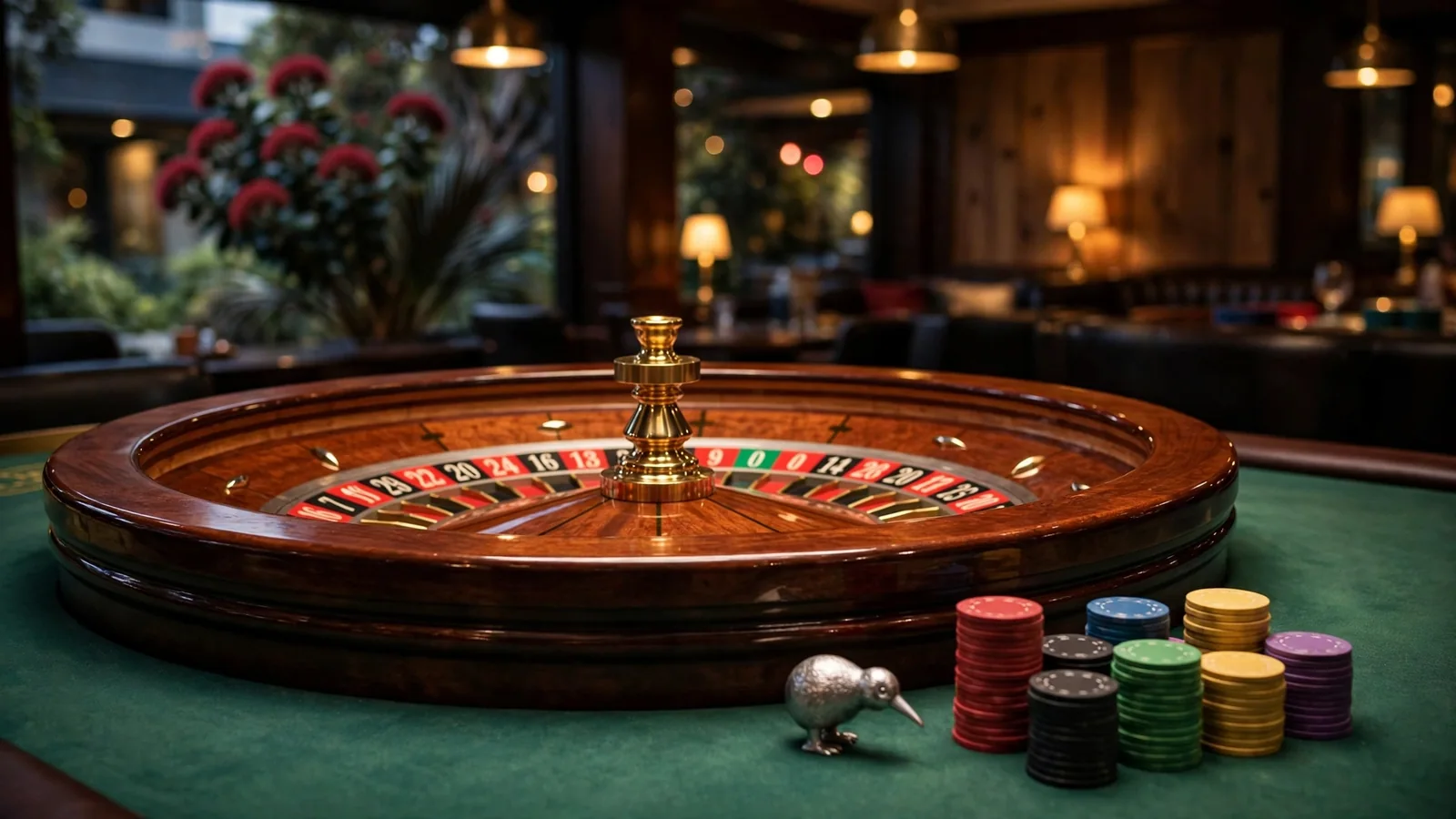
The winning number is the one shown by the numbered pocket where the ball falls. Whether a bet pays therefore depends on the relationship between that pocket and the selection you made. Automating the placement does not alter that relationship: a number bet still needs the ball to land in the chosen pocket, while a colour or parity bet still needs the pocket to match that selection.
This matters when considering claims about auto bet roulette. The phrase describes how bets are placed, not a separate kind of roulette outcome. A setting that repeats a bet can also repeat the same exposure to the result; it does not improve the chance that the next pocket will match your selection. More activity is not evidence of a better result.
Before using an automated betting control, make sure you understand which chips and table positions it will use. The action may be automated, but the selection is still yours. Keep the distinction clear: betting controls manage placement; the ball’s final pocket determines whether the bet wins.
Does Live Auto Roulette Spin Every 30 Seconds?
A live roulette table should not be assumed to start a new spin every thirty seconds. That interval is not a universal feature established for live auto roulette, so it is not a sound basis for judging how quickly a particular table will run. “Auto” may describe an automated part of the experience, but it does not by itself set a fixed schedule for live rounds.

The key distinction is the presence of a live dealer. Live dealer roulette uses a physical wheel and ball, with the result produced at the table; it does not use a random number generator (RNG), the software mechanism that selects outcomes in software-based roulette. That difference concerns how the result is generated, not how often a spin begins. It does not establish a standard interval between live rounds.
If you are comparing a live table with a software game, separate the format from the pace. Software-based roulette relies on an RNG, while a live product involves a dealer. Neither distinction, on its own, confirms that a spin will occur at a particular moment or at a fixed interval. A label or description mentioning thirty seconds should not be read as proof that every live table follows that timing.
For a specific table, rely on the information displayed in its own interface rather than treating thirty seconds as a general promise. A countdown, where shown, is a feature of that table’s presentation; it is not evidence of a market-wide timing rule. The useful point is simple: live roulette is defined by its dealer-led format and non-RNG outcome, not by a guaranteed spin interval.
Created by the ”Casinosbonusesinfo” editorial team.