Crypto roulette in New Zealand: balance guide
 Available in US
See how crypto deposits, NZ-dollar gameplay, cash-outs, fees and casino terms can affect a roulette session.

Table of Contents
- How Crypto Roulette Handles Your Balance
- Crypto Roulette in New Zealand: The 2026 Legal Context
- Choosing a Crypto Roulette Site Without a Name-By-Name List
- Deposits, Withdrawals and Network Fees
- Roulette Games and Crypto Bonuses: Read the Terms First
- What to Check in Crypto Roulette Reviews
- Playing Crypto Roulette Online: From Deposit to First Bet
- Crypto Roulette for Players in New Zealand
- Crypto Russian Roulette Is Not Casino Roulette
- Live Roulette and Bonus Contribution Rates
How Crypto Roulette Handles Your Balance
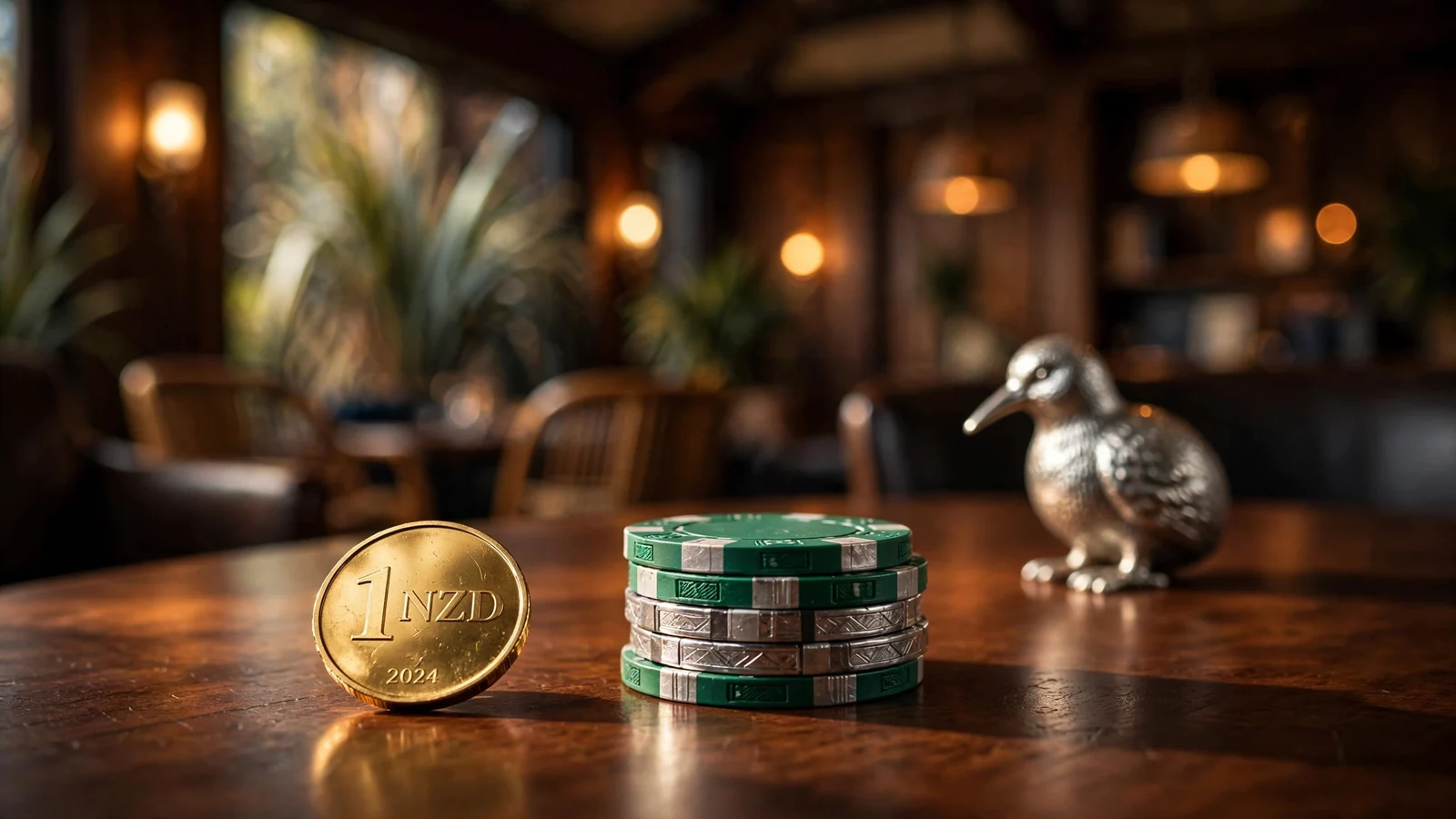
A crypto roulette account can involve two different measures of value: the cryptocurrency you send and the New Zealand dollar balance used for betting. Most casinos convert crypto into NZ dollars for gameplay, then convert the remaining balance back into cryptocurrency when you cash out. The roulette table may therefore show stakes and winnings in NZ dollars even though the money entered and leaves your account as a digital asset.
That distinction matters because a cryptocurrency amount and its NZ dollar value are not interchangeable over time. The value of Bitcoin, Ethereum or another coin can move between the time you fund an account and the time you withdraw. A balance that represents a particular NZ dollar amount when credited may therefore correspond to a different quantity of cryptocurrency later, depending on how the casino handles conversion and what the asset is worth at that point.
Consider the two sides separately. At the start, the casino translates the deposited crypto into the currency used for play. Your roulette stake then comes out of that playing balance, and any returns are added to it. At cash-out, the balance is translated back into crypto. The amount sent to your wallet is not simply the original coin quantity returned unchanged: it reflects the balance left after play and the conversion applied when the casino processes the payout.
Choosing a crypto roulette site in New Zealand calls for checking the details that matter to you before you play. Use these operator notes as a reference when deciding what to look into.
License: Malta Gaming Authority, licence no. MGA/B2C/394/2017 N1 Casino lists a Malta Gaming Authority licence, number MGA/B2C/394/2017. You can use that detail as a starting point for checking its licensing information.
Payout speed: 1-3 business days Lamabet lists a payout speed of 1–3 business days. Check the terms to understand how that stated timeframe applies to your withdrawal.
Payout speed: 1-3 business days Wintino lists a payout speed of 1–3 business days. You can review its terms for details on how payouts are handled.
License: Malta Gaming Authority, licence no. MGA/B2C/370/2017 Play Grand lists a Malta Gaming Authority licence, number MGA/B2C/370/2017. You can refer to this information when checking its licensing details.
License: Tobique Gaming Commission, licence no. 0000091 7Bit Casino lists a Tobique Gaming Commission licence, number 0000091. This gives you a specific licensing detail to verify.
License: Tobique Gaming Commission, licence no. 0000064 Neospin lists a Tobique Gaming Commission licence, number 0000064. You can use the licence information as a starting point for further checks.
License: Tobique Gaming Commission, licence no. 0000002 Ricky Casino lists a Tobique Gaming Commission licence, number 0000002. This is a specific detail you can check when assessing the operator.
License: 07017519840 · Payout speed: 1-3 business days Zotabet lists the identifier 07017519840 and a payout speed of 1–3 business days. You can check its terms for more context on the payout timeframe and the identifier.
License: Curaçao Gaming Authority, licence no. OGL/2024/165/0185 BitStarz lists a Curaçao Gaming Authority licence, number OGL/2024/165/0185. You can use this licence detail when reviewing the operator.
This can make a session’s result look different depending on which currency you use to assess it. Your table balance may be unchanged in NZ dollar terms while the equivalent amount of crypto has shifted in value. Conversely, a crypto amount can rise or fall in NZ dollar value even when the number of coins remains the same. The gambling result and the exchange-value movement are separate effects, though both can influence what you ultimately hold.
For that reason, compare like with like when reviewing a session. If you only look at the number of coins received, you may miss whether their NZ dollar value differs from the value of the crypto you put in. If you only compare NZ dollar figures, you may overlook that the quantity of crypto required to represent those figures has changed. Neither measure alone tells the whole story of the transaction.
The conversion point is important too. A casino that converts crypto to NZ dollars for play is not necessarily keeping your playing balance exposed to the coin’s price movement in the same way as a wallet holding crypto. But the value of the crypto you own can still change while you are playing, and the conversion back at withdrawal means the eventual crypto amount can reflect a later value. The exact calculation depends on the operator’s conversion process; the basic point is that the playing balance and the crypto balance are not necessarily the same thing.

A useful mental model is to treat the NZ dollar balance as the casino’s unit for the roulette session and the cryptocurrency as the means of moving value in and out. A win increases the balance used for play; a loss reduces it. Neither outcome fixes the crypto’s value outside the casino. Once the balance is converted back, the number of coins you receive can be affected by the gap between the two conversion moments as well as by what happened at the table.
This is the central money distinction in crypto roulette: the game may be settled in NZ dollars while the account is funded and paid in crypto. Keep the two measures separate when judging what a session cost or returned. A favourable roulette result does not remove exchange-value risk, and a change in the coin’s value is not itself a roulette win or loss.
Crypto Roulette in New Zealand: The 2026 Legal Context
For Kiwi players, the legal position is different from the one applying to casino operators. The Gambling Act 2003 bars online casinos from being based in New Zealand, but it does not make it an offence for a person here to use an offshore casino, including one that accepts Bitcoin. Players are not subject to a fine or criminal prosecution simply for wagering on an offshore site. You must be at least 18 to gamble online.
Attention: While it is not an offence for a person in New Zealand to use an offshore casino, you must be at least 18 years old to gamble online.
That does not mean every offshore website is authorised to serve New Zealand customers. Under the earlier arrangement, online casino services supplied from overseas were not licensed or supervised by a New Zealand regulator. If a dispute arose with an offshore operator, customers had no domestic government recourse. A foreign licence is not the same as New Zealand oversight.
The Online Casino Gambling Act 2026, which came into force on 1 May 2026, sets up New Zealand’s first domestic licensing system for online casino gambling. Its introduction is phased rather than immediate. Operators already serving people in New Zealand before that date may continue during the transition, subject to the Act’s rules. That transitional permission runs to 1 December 2026; providers that have not applied for a licence must stop offering online casino gambling in New Zealand by then.
The full licensed system is not expected to be operational until 2027. The law also provides for unlicensed operation to become an offence around the middle of that year. These dates matter because “legal to play” and “licensed to operate” describe different questions: the player’s use of an offshore site is not treated as the operator’s authorisation to provide a service.
For crypto roulette, the payment method does not change that distinction. Using Bitcoin or another cryptocurrency does not give an operator a New Zealand licence, nor does it remove the age requirement. During this transition, the relevant issue is whether an operator falls within the Act’s transitional provisions and, as the licensing system develops, whether it has the required authorisation. A site’s own statement about its status is not a substitute for the legal framework.

Choosing a Crypto Roulette Site Without a Name-By-Name List
A polished cashier and a large roulette lobby do not tell you who is responsible for the service. When comparing crypto roulette sites, start with the operator’s legal identity and the licence it says it holds. Look for the regulator’s name, the legal company behind the site, and a way to verify the licence directly with that regulator. A badge or a statement in the site footer is a claim, not proof.
For Kiwi players, a foreign licence is not the same as a New Zealand licence. The country’s domestic online casino regime is being introduced in stages, and offshore operators should not be described as locally licensed merely because they accept customers here. Check what the stated licence covers and whether the regulator recognises the operator. If the company’s identity is hard to find, the licence cannot be independently checked, or the site implies that it has New Zealand approval without evidence, treat that as a reason to stop rather than a minor paperwork issue.
Read the cashier and account rules before sending funds. The site should explain how it handles deposits, withdrawals, identity checks, and account restrictions. Cryptocurrency does not make identity checks disappear: a casino may ask you to verify who you are, including before processing a significant transaction or a withdrawal. A promise of “no verification” is not a sound substitute for knowing who operates the service or which regulator, if any, can address a complaint.
- Verify the operator’s legal identity and regulator
- Read cashier and account rules before sending funds
- Research the complaints and payout escalation process
- Rely on footer badges as proof of licensing
- Trust promises of “no verification” as a safety substitute
- Accept broad operator discretion without a challenge route
Then examine what happens if a payment or account decision is disputed. Find the operator’s complaints process, the route for escalating an unresolved complaint, and the terms that allow it to delay or refuse a payout. These details matter more than a page of promotional claims. If the rules give the operator broad discretion but offer no clear way to challenge a decision, you have little basis for expecting a dispute to be handled fairly.
Payout timing needs particular care because two separate stages are involved. First, the casino reviews and approves the withdrawal request. After it releases the payment, the relevant blockchain network must confirm the transaction. A site may process its part promptly while the network takes longer, or the casino’s review may be the slower stage. A headline claiming that withdrawals are “instant” can blur these steps; look for separate information about operator processing and blockchain confirmation instead.
A specialist review has reported different approval times for individual casinos, including one operator approving requests in as little as two hours and another taking as long as two days. Those are attributed reports, not a dependable promise about your own withdrawal. Processing can also depend on account checks and the operator’s procedures. Treat a stated time as useful only when it is clear which stage it describes and whether it is a published policy or a reviewer’s observation.

The site’s terms should also be readable before you create an account. Check whether they explain what happens if your account is restricted, how the operator handles suspected errors, and which rules apply to customers in New Zealand. Compare the wording on the promotional page with the full terms; if an important condition appears only after you have started a transaction, that is not transparency. This is not a recommendation to chase the most generous offer. A promotion can add conditions that make the account harder to use, so assess it separately from the basic service.
Finally, consider whether the information stays consistent. The company name, licence details, customer support information, and payment rules should match across the site’s legal pages. Be wary of vague ownership, unverifiable regulatory claims, or assurances that sound stronger than the written terms. The aim is not to find a site that promises the most. It is to establish who is offering the service, what oversight applies, and what the operator’s own process actually says before you rely on it.
Deposits, Withdrawals and Network Fees
A crypto cashier has two separate directions: sending funds to the casino and requesting a payout to your own wallet. Before making either transfer, check the currency and network shown in the cashier. A wallet address is not interchangeable across networks, even when the currency has the same name.
For a deposit, select the cryptocurrency the cashier accepts and copy the deposit address it provides. Send the funds from your wallet to that address, using the network specified by the casino. The balance is not available for play simply because you have pressed send: the transaction must be confirmed on the blockchain and then credited to your casino account. Keep the transaction record until the credit appears, in case you need to ask support to trace it.
Network Mismatch
Sending cryptocurrency over the wrong network can result in the permanent loss of your funds; you must match the network exactly.
The network choice matters particularly with USDT. A specialist review has reported lower transaction costs for TRC-20 than for ERC-20, but fees depend on the network and can change. Check the cashier’s current instructions and any fee displayed before sending; do not assume the cheaper route is supported for your deposit. Sending cryptocurrency over the wrong network can result in permanent loss of funds, so match the network exactly rather than relying on the currency label alone.
To request a crypto withdrawal, choose the payout currency, enter your own wallet address and the amount, then submit the request. The casino must approve it before the winnings are sent. After approval, the transaction still needs to be processed and confirmed on the blockchain. These are distinct stages: a request can be waiting for the casino even when no blockchain transaction exists yet, while a submitted transaction can be awaiting confirmation after the casino has released it.
Allow for identity checks as well as payment processing. Crypto deposits do not remove verification requirements, and casinos may require identity checks for significant transactions. Some also request documents before processing a first withdrawal. A payout delay therefore does not, by itself, show that the blockchain is slow; check whether the request is awaiting casino approval, verification or network confirmation.
Before confirming a transfer, compare the address, currency and network on both sides. If the cashier gives a transaction fee or minimum, read it there rather than relying on an old estimate. Once crypto has been sent to an incompatible address or network, recovery may not be possible.

Roulette Games and Crypto Bonuses: Read the Terms First
A crypto bonus can add funds to your casino balance, but it does not make the money immediately withdrawable. Before accepting an offer, check its wagering requirements: the amount you must bet before bonus funds or related winnings can be cashed out. The calculation may apply to the bonus alone or to the deposit and bonus together, so the multiplier by itself does not tell you how much play is required.
A specialist review of New Zealand offers puts wagering requirements in the 30–40x range, while another specialist review describes Bitcoin casino bonuses at 25–45 times the bonus amount. These are reported ranges, not promises about an offer you may see. Read the promotion’s own terms and identify the exact base for its calculation. For instance, a NZ$100 bonus with a 35x requirement means NZ$3,500 in cumulative bets are required before withdrawal is possible, if the multiplier applies to the bonus amount.
Roulette may count for less
The games you play can affect how quickly wagering requirements are met. Slots may count fully toward the requirement, while blackjack and roulette may contribute only 5% to 20%. In practical terms, a bet on roulette can add much less wagering progress than the same bet on a slot. A promotion that looks generous may therefore take longer to clear if you prefer table games.
Check the contribution rate for roulette specifically, rather than assuming that every game contributes equally. Some promotions may exclude particular games altogether. If a game is excluded, bets placed on it may not help meet the requirement; playing excluded games while the bonus is active may also put the promotion at risk. Follow the offer’s rules, including any maximum bet limit: exceeding that limit may void the bonus and its winnings.
Roulette bets may contribute significantly less toward wagering requirements (often only 5% to 20%) compared to slots, which may count fully.
Check the clock and the bonus type
The deadline matters as much as the multiplier. A specialist review reports bonus wagering periods of seven to thirty days, but the actual expiry date is set by each promotion. Check when the clock starts, whether the deadline applies to the bonus or the wagering requirement, and what happens to any remaining balance when time runs out. A forfeitable bonus can disappear if its requirement is not completed before the stated deadline.
Also establish whether the bonus is sticky or non-sticky. A sticky bonus stays attached to the account and cannot be withdrawn separately from the winnings it produces. A non-sticky bonus can be removed after the wagering requirement is completed. The distinction affects what you can cash out and when, so do not rely on a short promotional label in place of the full terms.
No-deposit offers deserve particular scrutiny. A specialist review reports requirements of 50–60 times the bonus and withdrawal caps equivalent to NZ$100–$250. The cap limits how much can be withdrawn from the offer, even if you win more. Check whether the cap applies to winnings from bonus play, whether identity checks are required, and whether the offer has a separate expiry date.
Confirm every condition before opting in
Read the cashier minimum and the bonus qualifying minimum separately; they may differ. Check the eligible payment methods, the required deposit, the wagering base, the deadline, game exclusions, contribution rates, maximum bet and withdrawal cap. If one condition is unclear, ask the operator to explain it before claiming the promotion. Crypto bonuses are paid in cryptocurrency, so the value you eventually receive may not match the value you had in mind when you accepted the offer.
The useful comparison is not simply which offer advertises the largest bonus. It is how much qualifying play it demands, which games count, how long you have, and what restrictions could prevent a withdrawal. A clear set of terms is more valuable than a headline amount; the small print is where the actual offer lives.
What to Check in Crypto Roulette Reviews
A review that calls a crypto payout “fast” may be describing only part of the process. Check whether it distinguishes the casino’s approval of a withdrawal from the later confirmation of the transaction on the blockchain. The first is an operator-side step; the second depends on the cryptocurrency network. A quick approval does not, by itself, mean the funds have reached your wallet.

Some specialist reviews report Bitcoin withdrawals being processed within minutes. Treat that as a report about the cases reviewed, not a guaranteed timeframe for every request. The wording may refer to the casino releasing a payment, rather than the full time until it appears as confirmed in your wallet. Look for a clear explanation of what the reviewer timed and where the clock started and stopped.
Comparisons with card payments need the same care. A specialist review may describe crypto withdrawals as faster than card withdrawals, which it puts at 1–3 days. That comparison is useful only if it says whether it measures operator approval, receipt of funds, or both. If those stages are not defined, the headline can sound more precise than the underlying claim.
Check whether the review discusses identity checks as part of the withdrawal process. Many casinos require identity verification before approving a first withdrawal. A review that praises a quick payout but does not say whether verification was completed may leave out a step that affects a new customer’s experience. Crypto does not remove that possibility. If the review reports no check in one case, that is not proof that the same will apply to your account.
The quality of the evidence matters, too. A reviewer who records the request, approval and wallet receipt separately gives you more to assess than one who repeats a casino’s advertised processing claim. See whether the account explains the payment method used and whether any delay was attributed to the casino or the blockchain. A single reported result can show what happened in that instance, not establish what will happen on your next withdrawal.
Finally, read the date and context of the review. Processing practices can change, and a result from one account or transaction should not be treated as a promise. Reviews are most useful when they separate observed events from promotional wording, identify what was actually measured and acknowledge the steps between requesting a payout and seeing it confirmed.

Playing Crypto Roulette Online: From Deposit to First Bet
To play crypto roulette online, the first step is to make a deposit through the casino cashier. Select a cryptocurrency that the cashier accepts, then check the network options shown for that deposit. A coin and a network are not interchangeable details: the casino’s instructions specify where the funds need to be sent.
Copy the wallet address provided for the selected deposit method. Before sending anything, compare the address and network in the cashier with the details in your own wallet. A transfer sent to the wrong network may result in permanent loss of the funds. Crypto transfers cannot be treated like a payment that can simply be reversed if you spot a mistake afterwards.
Send the cryptocurrency to the displayed address, using the network specified by the casino. Do not rely on an address saved from an earlier deposit; check the cashier’s current instructions each time. If anything on the payment screen or in your wallet does not match, pause rather than sending and contact the operator through its stated support channel.
Sending the transfer does not necessarily make the balance available for a bet immediately. The transaction must be confirmed and the casino must credit the deposit to your account. Until the credited balance appears, you may be unable to start playing. Keep the transaction details available in case you need to ask support to trace a deposit that has not appeared.
Once the amount has been credited, check that the account balance reflects it before opening a roulette table and placing a bet. The balance shown in the account is the practical point at which the deposit process is complete; a wallet showing that a transfer was sent is not the same as a casino account showing usable funds.
Paying with cryptocurrency does not remove identity checks. A casino may still ask you to verify your identity, including in connection with significant transactions, and a crypto deposit is not a way around those requirements. Be prepared to follow the operator’s verification process rather than assuming that a wallet transfer alone is enough to access every account feature.
Deposit Process
Choose an accepted cryptocurrency in the cashier and copy the provided wallet address.
Compare the address and specified network in the cashier with the details in your own wallet.
Transfer the funds using the exact network specified and wait for the transaction to be confirmed and credited to your account.
The sequence is simple, but the network check deserves more care than the click that sends the funds. Confirm the cashier’s instructions, send only to the matching address and network, then wait until the deposit is both confirmed and credited before betting.
Crypto Roulette for Players in New Zealand
For Kiwi players, the cashier options at a casino that accepts cryptocurrency depend on the operator. A specialist casino review reports Bitcoin, Ethereum, Litecoin and USDT among the currencies accepted by some casinos serving New Zealand. Treat that as a snapshot of reported options, not a promise that every site offers all four: payment methods can change, and the cashier is the place to check what is currently available.
USDT is a cryptocurrency designed to track the US dollar. A specialist review describes it as a common cashier option at established operators and identifies TRC-20 as a preferred network where lower transaction fees are the aim. The network is the system used to send the cryptocurrency; it matters because a wallet address and network must match. A lower quoted fee is not useful if the casino does not support the network you choose.
Some operators may also show other cashier methods, but an option being visible does not tell you whether it is suitable for your circumstances. Check the currency, network, fees and any conditions shown by the operator before committing funds. Availability can differ between casinos and may change without notice. A balance held in cryptocurrency also remains exposed to changes in its value; the amount you can spend or receive in New Zealand dollars may not stay constant.
Crypto payment does not make an account anonymous or remove identity checks. Casinos may ask you to verify your identity, including before processing a withdrawal or when a transaction requires additional checks. Be wary of claims that a crypto cashier guarantees no checks: payment method and verification are separate matters. If you are asked for documents, use the operator’s stated secure process and make sure the request is genuinely from the casino.
Age requirements apply regardless of how you pay. You must be at least 18 to gamble online. Choosing Bitcoin, USDT or another cryptocurrency does not create an exception, nor does having a wallet establish that you meet the age requirement.
The practical picture is therefore narrower than a list of coins might suggest. A currency’s presence in a cashier is only one part of the choice; supported networks, fees, account checks and the operator’s current terms also matter. Confirm those details directly before sending funds, rather than relying on an old description of a casino’s payment options.
Crypto Russian Roulette Is Not Casino Roulette
Russian roulette is not a casino roulette format. In casino roulette, players place bets on outcomes of a wheel and ball; the name “Russian roulette” refers to a different, dangerous activity. Adding cryptocurrency to the phrase does not make it a recognised casino game or turn it into a safe form of gambling.
Critical Distinction
Russian roulette is a dangerous physical activity, not a casino game; do not confuse it with casino roulette or attempt to simulate it.
That distinction matters if you encounter a page or promotion using the label. A phrase that combines crypto and Russian roulette is not enough to establish what is being offered. It could be a misleading title, a reference to content outside casino gaming, or an attempt to attract attention. Do not treat it as a normal roulette product unless the operator clearly identifies the game, its rules and the provider responsible for it. If those details are absent, there is no sound basis for depositing or playing.
Nor should the language of chance disguise physical danger. Casino roulette involves wagering on game outcomes; Russian roulette is not a gambling activity to imitate, simulate in real life or approach as entertainment. A casino brand or cryptocurrency payment option does not change that.
If your interest is ordinary online roulette, assess the actual game on its own terms rather than relying on an ambiguous label. Check what the game does, how bets work and which operator is responsible. A responsible gambling product should also make its purpose and safeguards clear; a dramatic name alone says nothing about either. Avoid any offer that blurs casino play with dangerous conduct, or that uses the phrase without explaining what is behind it.
Cryptocurrency is a payment method, not evidence that a game is legitimate, safe or properly described. It does not make a dangerous activity acceptable, and it does not turn an unclear offer into roulette. Keep the categories separate: casino roulette is a wheel-based gambling game; Russian roulette is not a casino game to seek out.
Live Roulette and Bonus Contribution Rates
Live roulette can look like a natural way to use a casino bonus: the game is roulette, the stake is made at a live table, and any winnings appear in the same account. But the game’s contribution to wagering requirements may be much lower than its contribution to the entertainment. The promotion’s rules determine whether your bets count, and at what rate.

Published casino terms commonly assign slots a full contribution toward wagering requirements, while roulette and blackjack may count at only 5% to 20%. That means a roulette stake may move the requirement forward by only a fraction of its face value. A bonus can therefore take longer to clear through roulette than through a game with a higher contribution rate. The exact treatment of live roulette is not universal: some terms group it with roulette, while others set separate rules for live dealer games.
For crypto live roulette, check the promotion’s game contribution table before opting in or placing a qualifying bet. Do not assume that a live table counts at the same rate as an automated roulette game. If the terms exclude live dealer games, bets there may make no progress toward the requirement at all. A displayed balance is not proof that the bonus is close to being cleared.
Read the contribution rule alongside the promotion’s other restrictions. Check whether the bonus has a maximum permitted bet and which games are excluded. Exceeding a stated maximum bet, or playing an excluded game while the bonus is active, may void the promotion and its winnings. Those conditions matter even when a game appears in the casino’s lobby or accepts your chosen cryptocurrency.
Expiry also affects whether a low-contribution game is practical. A specialist casino review describes bonus expiry periods as running from seven to thirty days, but the promotion’s own terms should govern your decision. A short deadline combined with a reduced roulette contribution can leave too little time to complete wagering through live play. If the rules are unclear about live roulette, ask the operator for written clarification before activating the offer; interpreting silence as permission is a poor way to protect a balance.
The useful comparison is not simply the advertised bonus against the amount you plan to deposit. It is the contribution rate for the games you actually intend to play, together with the restrictions and expiry stated in that offer. If live roulette is your preferred format, a bonus with a low contribution rate may be less useful than one whose rules treat the game more favourably—or no bonus at all.
How do New Zealand crypto casino bonuses work?
Bonuses are typically paid in cryptocurrency and usually come with wagering requirements of 25x–45x the bonus amount, often with a 7–30 day deadline. Roulette may contribute only 5%–20% toward wagering, and bonus terms can also include withdrawal caps or restrictions.
Can I withdraw my winnings back to crypto?
Yes. You select a cryptocurrency, enter your wallet address and withdrawal amount, then submit the request. The payout is sent after the casino approves it and the blockchain confirms the transaction.
Is my crypto converted to NZ dollars?
Yes, most casinos convert your crypto into NZ dollars for gameplay and convert the remaining balance back into crypto when you withdraw. The amount of crypto you receive can differ from what you deposited because the conversion happens at a later time.
Published by the Casinosbonusesinfo team.